Schlagwort: patents

  • #8 Key Facts about U.S. Patent Litigation (Mark Lemley – Season 2 – Episode 2)

    In this episode of IP Talks, Mark Lemley, an esteemed legal scholar from Stanford Law School, about the significant changes and challenges within the U.S. patent system over the past few decades.

    The discussion covers topics such as the creation and impact of the Federal Circuit, the influence of the America Invents Act, and the rise of non-practicing entities (patent trolls) and their effect on patent litigation.

    We also delve deep into changes brought about by landmark cases like Alice Corp. vs. CLS Bank International that have redefined the landscape of software patents, and the implications of the Supreme Court decisions on genus claims in biotech and pharmaceuticals.

    Mark also shares insights into procedural adjustments in patent law, addresses forum shopping in litigation, and concludes with thoughts on the broader implications and the future direction of intellectual property law.

    Overall, the conversation provides a deep dive into the complexities and evolving nature of patent law in the U.S., offering valuable insights for legal professionals and innovators alike.

  • #7 The former WIPO Secretary General on Trade Secrets and Industrial Espionage(Francis Gurry – Season 2 – Episode 1)

    Summary

    In this episode of the IP Talks podcast, host Jan-Willem Prügel interviews Dr. Francis Gurry, an Australian lawyer and former Director General of the World Intellectual Property Organization (WIPO) from 2008 to 2020. Dr. Gurry, with an academic background in law from the University of Melbourne and the University of Cambridge, shares insights from his illustrious career, which includes overseeing the Patent Cooperation Treaty (PCT) and establishing the WIPO Arbitration and Mediation Center.

    The discussion covers a range of topics including the nuances of trade secrets, industrial espionage, China’s rising influence in the global knowledge economy, and the evolving landscape of intellectual property (IP) law. Dr. Gurry also reflects on historical instances of industrial espionage and the current geopolitical shifts towards closure and their impact on science, technology, and IP. The episode provides a deep dive into the complexities of IP law and trade secrets, making it a must-listen for IP practitioners and enthusiasts alike.

  • #5 – Chinese Patent Linkage and Trade Secret Litigation (Benjamin Bai – Season 1 – Episode 5)

    Summary

    Key Discussion Points:

    • Exploration of Patent Linkage: Learn about complex IP concepts, such as China’s patent linkage system, which aligns with international frameworks but adapts to China’s unique regulatory landscape.
    • Trade Secret Litigation Trends: The podcast highlights recent developments in China’s trade secret laws, discussing landmark cases, the role of local and international regulations, and methods to safeguard sensitive business information.
    • Understanding Cross-Cultural IP Practice: IP Talks provides guidance for Western legal practitioners working with Chinese clients, emphasizing cultural sensitivity and strategic communication for effective partnerships in the Chinese legal environment.

    Time stamps

    00:00 Introduction and Disclaimer

    00:34 Meet Benjamin: Leading IP Practitioner in China

    01:40 Benjamin’s Career Journey

    12:33 Understanding Patent Linkage in China

    20:56 Recent Developments in Trade Secret Litigation

    32:19 China’s Role in the Global IP Community

    39:46 Final Thoughts and Farewell

    Show notes

    Building a robust trade secret strategy in China (https://www.iam-media.com/guide/global-life-sciences/2024/article/building-robust-trade-secret-strategy-in-china)

    Transcript

     Disclaimer, the views, opinions, and statements expressed by the hosts and guests on this podcast are entirely their own and do not represent or reflect the views of their employers or any affiliated organizations. Additionally, the content shared on this podcast is for informational purposes only. and does not constitute legal advice.

    For any legal matters, listeners should consult a qualified attorney or legal professional to receive advice tailored to their specific situation. IP Talks is a Jan Willem Prugel production, all rights reserved.

    Hello. My guest today is Benjamin by one of China’s. China’s leading IP practitioners with their on 30 years of experience. He’s a partner at the international law firm, king and wood. Mallesons in their. Shanghai office. Benjamin focuses on high stake. Steak intellectual property disputes involving complex patents. Trade secrets, trademarks and copyrights. As well. Well as unfair competition and antitrust claims. He has. Served clients from a wide range of industries, including pharmaceuticals. Chemistry semiconductors communications, manufacturing, biochem. Biochemistry and FinTech. In the past, he has been voted. One of the most influential IP people in the world. By managing IP intellectual property and he was named the winner. Winner of China IP, lawyer of the year award by. China law and practice. Benjamin has also been an IP star for the categories, patent licensing protection and litigation and trade secrets. Before KWM he was a partner at Jones day.

    And. Elena and ovary. In this episode, we talk about Benjamin’s rise. Rise to become one of the most seasoned IP litigators in his country. On a more technical front. We cover the current state of patent. Linkage in China. Patent linkage something that many European appealers. Laura’s may not be familiar with, but which plays a large role. In both China and the U S and is this something that’s good to know about? We also talk about the recent developments of trade secret litigation. And China, an area that is increasingly becoming more important for economies. Enemies. And we’re Benjamin is one of the leading experts. Finally. Finally, we discuss typical misunderstandings of Western lawyers when. I’m dealing with Chinese clients and what Chinese IP policy developments, Benjamin. And expects in the next years. This conversation really was a great. Pleasure.

    Not just because Benjamin is great. Discussion partner, but also because he. Gives out so much valuable information freely. And took some of his valuable. Time to be on the show. So without further ado, please enjoy this episode with.

    Welcome to IP Talks, the world’s greatest private podcast on all things intellectual property, starring some of the world’s leading IP practitioners and your host, Jan Willem Prügel. You’re in for a treat. Enjoy.

     Perfect. All right. How are you doing today?

    I’m doing good. I’m doing good.

    Benjamin, thank you so much for coming here today. And I would like to go straight into the topic. What I would first be interested in is how you originally got into IP law because I’d seen in your biography that you actually started your academic career with chemistry.

    Yes. I went to the U. S. to study chemistry and got a Ph. D. During the process, our lab was applying for a patent. So that was the first time I heard about such thing as patent lawyers, and I saw a couple patent lawyers coming to the lab, talking to my colleagues, and we applied for a patent. That idea.

    of becoming a patent lawyer one day started to crystallize in my head. After my PhD, I went to work for General Electric for About a year then I decided to pursue a law, legal career, so went to law school and this is how I got

    into, got into patent law. Very interesting. Could you specialize in IP law already in law school or did that come later at a law firm?

    U.

    S.

    law

    schools teach basically general law, but there’s always one or two courses on patent IP law or patent law and I knew at the time I want to be a patent lawyer. So I didn’t focus on anything else except IP law. And when I got out of law school, I joined Fisher Richardson, that’s a IP boutique firm focusing on pretty much patents, patent drafting.

    Patent prosecution and some litigation. That’s the kind of work I did

    early on in my career. I see. Were there any, did you were there any people in your circle of friends or in your family who had done something similar or was it something that you always pursued single mindedly because you just found that’s the right way for you?

    There’s no lawyer in my family. However you define my family, I can’t think of anyone as a lawyer. So this really was inspired by this patent lawyer who showed up in our lab and I thought that’s a possible career path. And lo and behold, now I’ve been in this field for about 27 years and never regretted a single day.

    I enjoy doing this. I love

    the

    work I do.

    Could you sketch your career a bit for us? Because as you said, it’s it’s, you have a lot of experience. A friend of ours, a mutual friend, Doug Clark, who mentioned me mentioned you to me said that you’re one of the most experienced and best patent litigators in China.

    Who better to ask than to maybe sketch out what a good or what your career might be? Looked like and what the individual phases were. And did you ever have a certain goal where you wanted to go or what, how did you move one foot next to the other?

    That’s very kind for Doug to comment like that.

    And I appreciate it. And he was my opposing counsel in the Nokia Qualcomm litigation. He was representing Qualcomm. I was the lead counsel for Nokia. In China, and that’s how we got to know each other. We respect each other, and I respect the world of Doug. My career can be roughly divided into a seven year stage, seven year stages.

    All the first seven years I was in Houston, Texas, focusing on drafting U. S. patents. and prosecution and some patent litigation. Second seven year I moved from my the law firm to Jones Day in Houston, started focusing on IP litigation in China. on behalf of multinational companies. There I pretty much represented a lot of technology clients like Nokia, Apple, IBM, et cetera.

    About seven years later, I moved from Jones Day to Allen Overy. Focusing on IP litigation on, on, on behalf of multinational companies. There, I focus more on the life sciences clients, for example Novartis and Abbott being two prominent life sciences clients there. Then I took a detour after about seven years.

    I joined Ant Group, which is the parent company of Alipay. I was there for five and a half years, then I moved to a crypto company called Amber Group based in Singapore. I was the chief legal officer for Amber for a year. About a year ago, I returned back to private practice and joined the Shanghai office of King Wood Mallesons.

    So this is a short summary of my 27 years of IP experience.

    Very interesting and fascinating. Just because that’s the one I at least understand. What exactly did the Amber Group do or what was your role there? It was a crypto,

    it was a crypto wealth management company. So it had nothing to do with IP. I see.

    And I did that during that one year, I did basically I did non IP work and that reinforced my desire to focus on IP. I did non IP and I think I enjoy doing IP work more than IP

    work. I see. Very interesting. You also mentioned that you had many clients. Are there any Proceedings or any types of litigation that you enjoyed most that you look back on fondly that you’d like to share?

    Yes, a couple of pieces that come to mind. Most of which relate to getting, relates getting preliminary injunctions in China. For example, for Abbott. And for Novartis during that one year period, I was lucky enough to get two preliminary injunctions for Abbott on a design patent they had on the package of their milk powder formula, okay, baby formula.

    Yeah.

    And at about the same time, I was acting for Novartis in their Gleevec litigation. And we were able to get two preliminary injunctions against two Chinese generic companies who infringed their GleeVac it’s an indication patent. And we were able to get preliminary injunctions in both cases.

    And I can talk about those cases for a day or two. And I still remember it. We did it in about 2014 ish. So it’s really about 10 years ago, but the Gleevec case is

    still very fresh on my mind. Yeah. What is most memorable maybe about that case, would you say, for you?

    It’s the first preliminary injunction in China on an indication patent.

    But also, it’s against off label use, so those two, and as anywhere in the world that you try to push API against off label use, it’s always difficult. And we were able to do that. So this is why this is still memorable, even 10 years later. And there hasn’t been a lot of successes by big pharma anywhere in the world.

    You look at getting PI

    against off label. Have subsequent lawsuits or litigation used the tactics that you were able to use in that case? Has it become a standard practice or were you only able to do this and then no one else has come up and could copy it?

    In China, not all cases are reported.

    There’s not a centralized database. So it’s hard to know if there’s another case like that. But at least I’ve been asking practitioners in my circle, and no one said they are aware of a similar case. So the Gleevec case may still be the only off label

    PI. in China. And speaking of pharmaceutical cases and the problem, the problems that come with it and enforcing pharmaceutical patents in China.

    One of the topics that we would like to discuss today is the patent linkage litigation in China. And so first of all, maybe for, especially for our European listeners, what is patent linkage in general and very basically how does it work in China?

    Chinese patent linkage is modeled roughly after the U.

    S. Hatch Waxman litigation. There it’s about Staying regulatory approval for a certain amount of time and pending patent litigation. Not sure you have that in Europe. I think in Europe, people will just go for PI. If you get a PI. You’re good. In the old days before pattern linkage, PI was the only option, but it’s extremely hard to get.

    In China, you’ll, in IP cases, or patent cases, I should say, for patent cases, you probably don’t get more than 10, 20 PI per year for what’s called invention patterns. And for design patterns. It’s easier to determine infringement for for invention patents. It’s hard, but for drug cases infringement read is not difficult.

    It’s the other things that you need to be concerned, which is validity, irreparable harm, and the balancing competing interests and all that. Because getting PIs is always hard, and China adopted a patent linkage system about two years ago. The idea is you patentee register with NMPR in China.

    It stands for national medical products. administration. It’s the Chinese equivalent of FDA. So there is a registration platform where patentees innovator drug companies patent owners can register their patents and tell the authority that I have certain patents, so don’t approve infringing

    drugs.

    So first

    you register. And you say can, so is it, so it’s not mandatory to register? No, it’s not. Okay. Yeah. If you don’t register, then you don’t get the benefit

    of

    patent linkage. Okay. So I guess most people would register it then.

    Yeah. To my knowledge, a lot of innovator drug companies are utilizing this procedure.

    So first you register, then a generic, when they make a generic a drug application, then they have to declare, Oh, this is the, Oh, I’m infringing this patent, but this is invalid. Or I think maybe this is close, but I don’t infringe for these reasons. So they make various declarations. Okay. Then, once you get their declarations, you need to sue them within the time limit, and then the regulatory agency and MPA will stay the regulatory review for nine months.

    So basically it’s a very convenient way to get PI. I see. Yeah. So for nine months, you either litigate before the Chinese patent office, Or in the Beijing IP court, you have two choices. The administrative route, which is the Chinese patent office. Now the official name is National Intellectual Property Office, but in the old days it’s called SAIPO or the Chinese Patent Office.

    So you can litigate before the Chinese Patent Office or you can litigate before the court. The relevant court is the Beijing IP Court. So you have two choices. You initiate litigation regardless where you can’t do both and you just file litigation then the regulatory review gets stayed for nine months.

    And generally speaking, the cases get done in about nine months. So you stay for nine months. That’s the value of patent linkage.

    Very interesting. Yeah. Europe, as far as I’m aware, does not have it. And indeed the U S is known for it. Also, I think they use the they call it the orange book where all these cases.

    Okay. Yeah, matters are listed. Has there been, so I’ve, you mentioned, or I’ve read in some of your material that the Chinese courts have somehow changed their jurisdiction on patent linkage a bit, or they developed it in recent years. Could you give us a brief overview of how it developed?

    Yes.

    A path of linkage is a system that’s superimposed on the current court system, so it doesn’t replace the existing path of litigation options, so they just, it gives you the court system. A nine month stay if you go into the patent linkage, but the way Chinese Supreme Court interpreted patent linkage it is relatively narrow.

    Okay, first, you must have an eligible patent registered. If you did not register the equivalent of orange book listing, okay, you have to register your patent. First, second, the eligible patents can only be compound patent, formulation patent, and indication patents. Those are the three eligible patents for patent linkage.

    Whereas for At litigation, any patent can be asserted even metabolite patent and crystal patent, and things like that. So you have a wider array of options available outside of patent linkage, but if you rely on patent linkage, those are the three patents. you can rely on. And most importantly, you must have your innovative drugs being marketed in China.

    So there’s one reason Supreme Court case, which emphasized this principle that China wants new drugs being marketed in China. If you’re going to come to China asking for patent linkage relief, we want you to introduce your drugs in China. So if you only have a patent in China without having marketed the drug in China, then you’re not basically eligible for patent linkage relief.

    You can go into courts. For regular litigation, so patent linkage has been interpreted to be a narrow exception to the general

    litigation. I see. Very interesting. So the marketing requirement is jurist so it’s case law that’s not written in the regulations itself.

    No, it’s not written in the law, but there’s one Chinese Supreme Court which decided that.

    In China. Just like the German system, it’s not a case law country, but now Chinese Supreme Court starts to mandate like cases are decided similarly or in a likely manner, okay? So facts of similar facts, when you have cases with similar facts, then it should be decided the same way. So it’s following the common law principle

    to somewhat.

    No, it’s dead. Super interesting. Thank you so much for this overview of the patent linkage system, which is very unknown to most European patent litigators, I would think, or IP lawyers in general. Another topic that you thought of that we could talk about, which is really interesting is the recent developments in trade secret litigation in China.

    So first of all, how common would you say are trade secrets in China, for example, also compared to patents and how does this translate into the number of trade secret litigation proceedings and what sort of or what sort of information is typically protected by trade secrets?

    Trade secret law has been on the books in China for years.

    There’s just one article in the anti unfair competition law that defines what trade secret is. And the concept is similar to the European concept and also the U. S. concept. I think at the very high level, it’s about non public information, technical or operational information that has economic value.

    And the owner of trade secrets have taken measures to guard its secrecy, okay? So these requirements are similar, but in China, like the continental system, there is no disclosure or discovery tools. So if you sue for trade secret misappropriation, you have to have evidence. But trade secrets, by definition, sits behind someone’s door.

    It’s not available for public inspection. So this is why maybe trade secret misappropriation happens on a daily basis, but you don’t discover that. And what happens is sometimes is circumstantial evidence indicates something’s wrong. Then you go to court. For this reason. There are a lot less trade secret cases than patent cases.

    Let me give you some numbers. In 2023, there were about 44, 700 patent cases in China, first instance. Let me repeat, close to 45, 000 cases in the first instance, but there were only a couple of thousand trade secret cases. First instance, I’m talking about several cases. So huge difference. The reason being the burden of proof, unable to discover misappropriation, unable to prove it.

    In recent years, The Supreme Court has been articulating principles for the lower courts to reverse burden of proof. If you made some, I’m not necessarily saying that you made a prima facie case, because that could be a high burden. If there’s enough evidence to indicate something’s wrong.

    Then there are times judges will say, okay, since they don’t, the plaintiff does not have the direct evidence, but the direct evidence lies in you. So you come forward with that direct evidence to prove you didn’t do it. And sometimes they’ll do raids. Courts will do raid raids.

    Similar to the French CZ downgrades conducted by courts or reversal burden of proof, plus the willingness to award high damages, especially Punitive damages up to five times. Those are all recent progress that led to record setting damages were in a case called Golden Elephant on in that case, a trade secret damages award was given to handed it down.

    It’s about 14 15 million US dollars. That made

    history. Rightly yeah. Is punitive damages something that’s also fairly new in Chinese legislation, in Chinese law, or is that something that has always been part of it of Chinese law? For trade secret

    cases, it’s relatively new, but for patent cases, it’s been there for more than 10 years.

    So it’s a welcoming change in the trade, in trade secret cases. Now you can get up to five times of the the regular damages

    as punitive damages. Wow. I was wondering are there any is it common in China to have non compete clauses for leaving employees? So basically saying in their working work contracts, if you leave this company, you’re not allowed to work for a similar company or competitor within the next 18 months or something like this, because this would also possibly stifle any trade secret dissemination with new employers.

    Yes. Non compete is

    enforceable in China, but you have to pay for the non compete, and the amount is anywhere from a third to two thirds of your annual salary, pro rated. Yeah. So if you limit them to six months, then on a monthly basis you pay the prorated compensation. It’s either two thirds or one third of your normal compensation.

    So it’s not cheap. Think about if you have thousands of employees and that can get expensive. But

    that’s a remedy available. I see. Very interesting. You also wrote an article about the recent developments in trade secret litigation. And I would also afterwards include the link in the show notes so people can read it because it’s incredibly well written and very helpful also from a practical perspective.

    Then you also list various points and tips, how one can improve how, on how to safeguard, one’s trade secrets. And one of the tips you give or one of the Things to consider is that it’s important to build good relationships with the local police and also the Chinese government’s agencies such as the state administration for industry and commerce.

    How would one go about doing so in practice?

    To build relationship locally, you need to have local presence. Multinational companies operating in China, they need to build local relationship in the community they operate. Because why the police? Because trade secret misappropriation can be criminal.

    If you’re going to run to the police, of course, they need to know who you are. And so building relationship before things happen, it’s always helpful. In the old days, it’s called State Administration for Industry and Commerce, but now they’ve changed the name to State Administration for Market Regulation.

    But it’s the same kind of functions in terms of their, they’re able to do administrative enforcement of trade secret theft. So you have three ways to address a trade secret issue. You can go the criminal route, the civil route, or the administrative route. Administrative route, you go to state administration for market regulation the old AIC.

    These relationships can be very helpful if you have a case, but my advice is, do it before you have the case. And if you don’t have local presence, rely on local lawyers who have that kind of relationship.

    Very helpful. Good advice. You mentioned that criminal prosecution for trade secrets and I assume there’s also criminal prosecution for patent infringement.

    Both of these, at least as far as I know, exist, also exist for patent infringement in Germany, but it’s rarely used. How common would you say is going for criminal prosecution for trade secret or patent infringement in China? Thank you.

    The Chinese patent law is pretty much modeled after the German patent law, but unlike the German patent infringement itself is not criminal.

    Patents passing all of them. if you mark something which is not patented as patented, that’s called passing off. Sometimes people call it passing patent counterfeiting. Okay. These can be criminal, but for the regular

    patent infringement, it’s not. Oh, okay. Good to know. And so for trade secret infringement though can be criminal.

    Yes. Yes. You have

    to have economic laws. For it to be criminal, the threshold is 300, 000 RMB, which translates into about 43, 000. 43, 000 is not a lot of money, but it’s hard to prove. Why? Because if I just took your confidential information and went to a different company and if I’m using it internally, how do you prove economic loss?

    If I just started using it, I used it for a day, you need preliminary injunction, right? And that’s where PI can be really helpful. But sending this guy to jail also stops it.

    Yeah.

    But then at the moment it’s hard to prove economic loss. So even though. The threshold is not a lot of money.

    Even proving one dollar

    loss is difficult. Yeah, I see. And so if you ever if, criminal prosecution is initiated and any evidence comes up there. Can that evidence be for infringement? Can that evidence for trade secret infringement be used in civil proceedings for trade secret infringement as well?

    Yes. Yes.

    But initially when police does the investigation, they may not share with you, but once. They go into criminal prosecution, then whatever evidence they used in the criminal court proceeding, then you can get that and use it in a civil proceeding. So criminal cases can be a nice way to discover evidence.

    But the early stage of criminal investigation, the answer is no, because it’s confidential investigation. I

    see. Thank you so much.

     So finally I would just like to get your views on how you see China’s role in the global IP community in the coming years.

    That’s an excellent question. I see the world as there are three important Economic countries and regions, that’s United States, European Union, and China. China and the U.

    S. are single markets, okay? One injunction covers it all. Europe, it’s a little challenging, at least with UPC. One injunction covers 17 countries. And you still got, 20 plus some countries to worry about, but in terms of where to file patents, my advice to both multinational companies and Chinese companies, you got to file in these three regions.

    Of course, if you don’t have budget, then file in your own country. If you have extra budget, then I would say U. S. Or European EPO. And I had good discussions with German lawyers. If you’re, if you can’t afford European patent lease file in Germany. So Germany can be it can be done relatively cheaply, and also sometimes the German courts are much more willing to give preliminary injunctions.

    So I think if you look at the world in terms of GDP, market and return on investments, I really think those three countries and regions are important. And China’s very

    critical. Yes, no doubt. So it will be probably relevant. Do you think they will each try to find their own solutions to certain IP problems, or do you think they’ll all merge into having the same rules or is that.

    impossible to foresee.

    I think the world is merging, even though there’s enough anti globalization sentiments. But I think when it comes to IP protection, this is probably the only thing various countries can still agree on. Every country wants to have a strong IP system. China is no exception. You look at China 20 years ago, when it comes to friend litigation.

    It’s all, it was about trying to, not to pay royalties, but now tables have, the tables have turned. There are a lot of Chinese companies who own essential patents in 5G, even 6G, and Chinese companies are seeking to collect, friend royalties. And Chinese courts are more assertive. And they’re happy to determine a world trend rate, even though that gets up, gets a lot of other courts upset, especially in the U.

    S. But as Chinese companies become more of an IP owner, Chinese courts are going to be much more influential. Because the supply chain are still in China, and you look at the cell phone industry, the mobile communication industry, the entire supply chain is still in China. You look at the pharma market, it’s the second largest pharmaceutical market in the world.

    And Chinese companies are also developing new drugs. Although multinational farmers are still leading the pack, but you look at all the things happening in China, I just think China is a must win market for anyone with

    IP. And given that China’s importance in the IP space is ever growing many firms and many non Chinese firms also have clients in China and given that you are one of the most experienced IP litigators in China itself, what would you say or what would you say that non Chinese law firms often get wrong about the needs and expectations of Chinese clients, whereas there may be a cultural divide that they first need to overcome.

    Yes,

    I think the cultural differences are the most important and also fatal, okay? It’s fatal in the sense of communication, right? And oftentimes the communication is in English. and everyone speaks English with a varying degree of comfort. That’s one. Second is, you cannot just look at Chinese clients as one singular group.

    Let’s follow the 80 20 rule. And if you look at the United States, because there’s lesser of data for Europe and also UPC. But the bulk, I want to say a large number of Chinese companies or clients are still defaulting overseas, right? They don’t appear in courts. You cannot say that’s representative of Chinese companies because the 20 percent they litigate As if they were a multinational company, I don’t need to name names, but, they have the same strategy as Nokia, and they have the same strategy as, I’ll say, IBM, okay, Apple, they learn from the best, they also are working with the best lawyers around the world, and Chinese companies are known to be fee sensitive, but that doesn’t represent the everyone.

    When results count, they’re willing to spend money. And so I think we should be careful now to generalize. There’s certain certain clients are still defaulting, whereas others are you, they are becoming plaintiffs. There are plaintiffs in UPC. This was unthinkable in 1997 when I became a lawyer in the U.

    S. It’s unthinkable. Yeah, Chinese companies owning this much IP and also a certain their IP around the world. So in the old days, I think IP globalization was in large part driven by European and the U. S. companies. But I really think the next decades or so is going to be Chinese companies.

    Yes.

    And they will also probably push for some regulation and some ideas on how IP disputes should be. litigated and resolved which used to be only coming from maybe from the U S more. And now this, maybe the roles are also reversed in some ways. So yeah, it’s going to be very dynamic field indeed. Yeah. Thank you. Perfect. Thank you so much. Benjamin this was a fantastic discussion. Is there anything else you’d like to share or to have to say to the listeners or anything that they should check out in terms of IP litigation in China?

    There’s a lot still, there’s a lot to talk about, but I’m gonna be respectful of your time.

    That’s first, let me thank you for this wonderful discussion. And second is I cannot overstress. the importance of understanding China. I started doing cases in China 20 years ago. The misconception, it just won’t go away. And I still get asked the questions about, Oh, being a foreign company, do I get a fair shake in the court system?

    And they still ask the same question they asked me 20 years ago. So I think Things are changing rapidly in China and I think it’s time to really accept China as an integral part of the IP world and everyone should at least learn how to litigate in China and also how to work with Chinese

    clients.

    That’s a great final words. Then thank you so much take care. Have a great Sunday and talk to you soon.

    Yeah. Bye. Bye.

     Thanks so much for tuning in today. If you enjoyed this episode of IP Talks, be sure to check out our other episodes and subscribe to the podcast on your favorite platform, whether it’s Apple Podcasts, Spotify, Google Podcasts, or wherever you listen, and don’t forget to follow us for updates and new releases.

    We really appreciate your support and we’ll catch you in the next one. Bye.
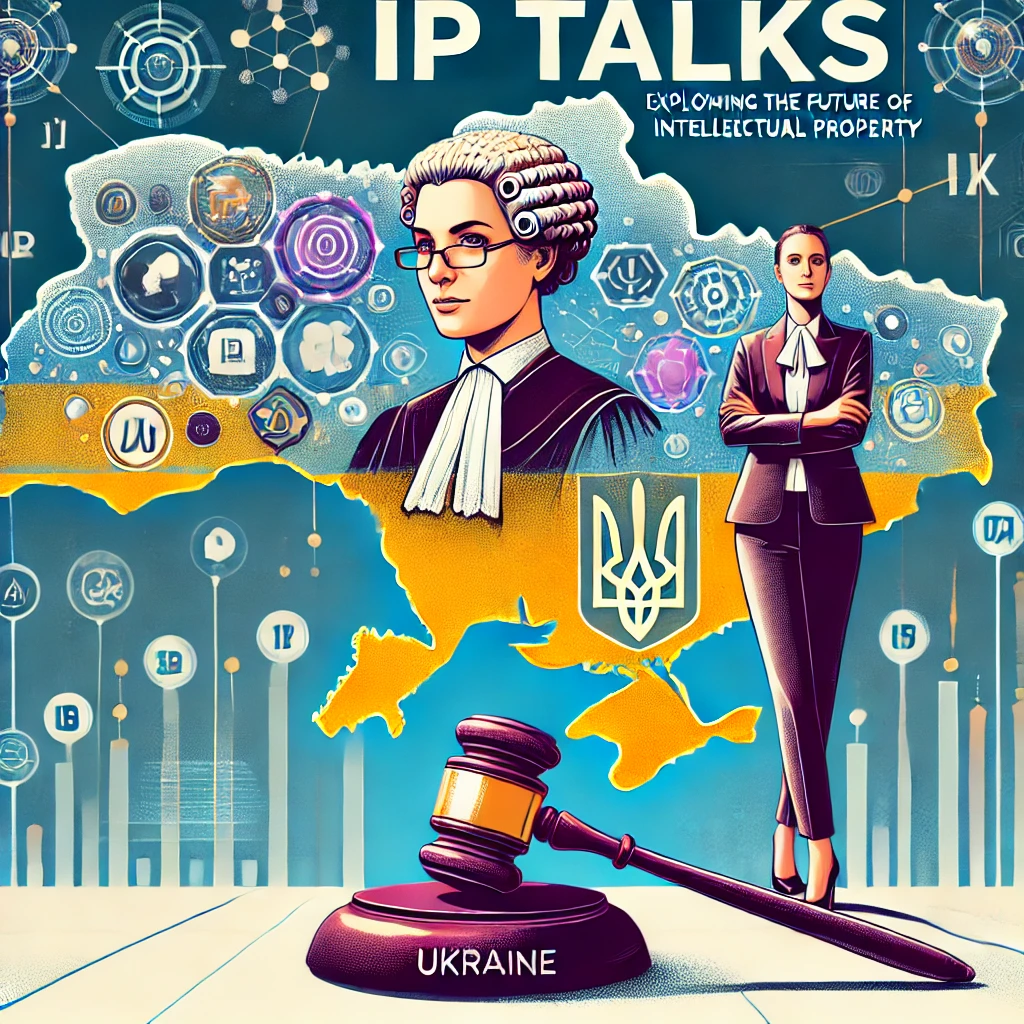
  • #4 – How AI and the War are Changing IP Law in Ukraine (Ilona Boliubash – Season 1 – Episode 4)

    Summary

    This comprehensive IP Talks episode with host Jan-Willem Prügel features an enlightening conversation with IP lawyer Ilona Boliubash, covering Ukraine’s transformative journey in intellectual property law amidst European integration and martial law. It explores the country’s adaptation to EU standards, the implications of recent political events, and legislative advancements such as the paused IP deadlines and AI-generated content regulation. The discussion also highlights Ilona’s academic insights on the nuances between common and civil law, the challenges faced by Ukrainian courts in patent litigation, and the innovative sui generis model protecting non-human-created works. Engaging and informative, this episode offers deep insights into Ukraine’s evolving IP landscape.

    00:00 Introduction and Disclaimer

    00:34 Meet Ilona: An IP Expert

    01:42 Ilona’s Journey in IP Law

    07:53 Ukraine’s EU Integration and IP Law

    12:39 Impact of War on Ukraine’s IP System

    16:31 Challenges in IP Litigation During Martial Law

    25:45 The Future of IP Courts in Ukraine

    29:44 Specialization of Judges in IP Cases

    30:28 Discussing the Thesis Topic

    31:01 Ukraine’s Progressive IP Legislation

    31:53 AI-Generated Content Protection

    33:33 Challenges and Future of AI in IP

    34:54 Conclusion and Final Thoughts

    45:30 Podcasting Journey and Inspirations

    49:54 Closing Remarks and Farewell

    Transcript

     Disclaimer, the views, opinions, and statements expressed by the hosts and guests on this podcast are entirely their own and do not represent or reflect the views of their employers or any affiliated organizations. Additionally, the content shared on this podcast is for informational purposes only. and does not constitute legal advice.

    For any legal matters, listeners should consult a qualified attorney or legal professional to receive advice tailored to their specific situation. IP Talks is a Jan Willem Prugel production, all rights reserved.

    My guest today is Ilona. . Ilona is an experienced IP lawyer. She specializes in intellectual property litigation. With a focus on patents and trademarks. Our expertise also includes copyright AI regulations, UDR P. And GDPR compliance as well as data protection. She also takes an active part in developing the Ukrainian moot courts, society, and IP and public in the national law competitions. Last, but not least.

    She also works as a legal specialist at strengthening Ukraine’s EU integration together with a Ukrainian NGO. Also she’s a cheapening scholar, a prestigious scholarship awarded to exceptional individuals to conduct postgraduate work in the UK. In her case, doing an LLM and IP and information law, Kings college, London. I met Ilona when she was coaching the Ukrainian team at this year’s IP moot court in Oxford, where her team delivered a strong performance and received an award. She herself is also previous Jessup moody judge. And coach. In this episode, we talk about the recent political events in the Ukraine and how they have shaped their IP landscape and especially the IP court system. Additionally, we discuss illness, fascinating research and IP protection of AI produced material. And Ukraine’s revolutionary legislative approach to it. I learned a lot from this discussion.

    I hope you will as well. So please enjoy this episode with . W Bush.

     Welcome to IP Talks, the world’s greatest private podcast on all things intellectual property, starring some of the world’s leading IP practitioners and your host, Jan Willem Prügel. You’re in for a treat. Enjoy.

    Hello. How are you doing?

    Hi, I’m very good. And you?

    I’m fine as well. Thank you. Thank you so much for taking time on, on a Sunday. Thank you

    so much for offering me to be on your podcast. It’s very great.

    Yeah it’s a lot of fun.

    But yeah I’m, I’ve been very much looking forward to our discussion. Then Ilona, thank you so much for coming.

    And so I invited you because I know you’re from the Oxford IP moot court where you were also a coach for the Ukrainian team who did very well, if I remember correctly. Although I didn’t judge any of your rounds, I believe, but

    but

    it was great meeting you guys. And so just to get started, could you briefly introduce yourself and just talk a bit about how you got into IP in general and what you’ve been doing in that space so far?

    Yeah, of course. First of all, thank you very much for your invitation to the podcast. That’s been great to hear that you’re doing this. I’m an IP lawyer for six years now. I have been working mostly in IP litigation in courts. So I’m an attorney in Ukraine. The most cases that I’ve dealt with were concerning patents namely the pharmaceutical ones, so like medicinal products ones.

    Yeah, it’s been a very interesting journey in IP. And now I’m also at working at GIZ at their rule of law project, so trying to help Ukraine to approximate our legislation to the EU ones in the most fundamental rights fundamental issues, so to say. So yeah, and for the last year, I’ve been studying IP law at master’s program at King’s College London as a scholar from Ukraine.

    There is the Union Scholarship. That’s the UK scholarship, which is given for people from different countries. Yeah. And that’s been so great and so rewarding journey studying IPO law from the best professors you can ever imagine. To truly reveal my IP passion, in all the fields possible during this journey.

    Yeah.

    What were some of your highlights in your masters so far? Or what would you say you enjoyed most?

    Yeah, I think that I enjoyed the most studying about like how the whole system works, because when you are a national professional, you work with only one jurisdiction. And so you see only one side of the picture, which is your own country.

    But when you are studying the fundamental problems of AP law, you start to think about Why it works that way, not just how it works and how it’s written in legislation or in court practice by, but what are the reasons for it to work like that and studying in the UK, I think, is, has been very interesting in this regard, because we started to.

    both civil law approach and the common law approach. So when it’s all combined and you see how the system works in general, like what is the practice of different countries and why it is like that, you get the sense of IP law itself, like the nature of it, the spirit of IP law. So I think that has been the the biggest highlight, like understanding the fundamentals, how it works and why it works that way. And that can be, that knowledge can be very much useful when you are trying to think about how you can perfect your own system. They have different approaches and the aim of them, and you can make over something from your own system, which can be like more appropriate if it makes sense.

    Yeah.

    Yeah, very interesting. Would you say that common law, the common law approach and the civil law approach to IP law is fundamentally different, or does it only seem that way? And it’s actually just a different, maybe a different dress, but person underneath. The dress, so to speak, is the same, or is it fundamentally a different approach to the problems?

    Yeah, that’s a very good question. Because I was trying to figure out that myself, like for the last year, are they really that different? And from the first point, from the first site it seems that. Yes, they are different fundamentally in approaching it’s the most visible in copyright, I think because civil law countries, they tend to, wrap the author in all his glory and try to give all the rights that it deserves.

    can possibly even get, especially like the French approach, the German approach, Ukrainian approach is also following like that way of thinking about author. And common law countries, they are more concentrated on profits. Yeah. And so like more utilitarian purpose of copyright and all of the IP law, how it works.

    But I think that this fundamental like approach is only, It has only some contrast in copyright. With regard to other IP rights, they are pretty much the same. So yeah, only copyright is the most controversial one, I think, in this regard.

    Interesting. Very interesting. And so did I understand you correctly when you plan to return to the Ukraine and then also work together on a political level possibly to influence the legislation or is that something you’re interested in or what’s your take on that?

    Yeah, I’m very much interested in trying to help our country like approximating our practices and our legislation to the EU ones because we’re in a very active process of EU integration right now. We are already in the negotiation process. We will have like bilateral screenings on a lot of chapters of European Union.

    And that’s the thing that I would very much. want to do, like helping our governmental authorities to, to get into this process and through this process as effectively and efficiently as possible. So yeah, that’s basically what I’ve already started doing in one of the chapters, the rule of law, and I hope that more yet to come.

    Oh, very cool. Interesting. The main topic, that we’ll be talking about is how IP litigation functions. in Ukraine how it’s been functioning since the beginning of the war in 2022 as well. And maybe some of the problems that arise from that besides the obvious ones. So maybe to, to.

    Could you, for people who are less versed on the history of the Ukraine, maybe give a brief overview of what possibly so the role of the Ukraine in terms of approaching being part of more part of the European Union versus being torn between the European Union and being closer to Russia in the last few years, or maybe decades what went on there?

    Yeah it all started like our active EU integration process started in 2014, I think, with the Revolution of Dignity when our former president Yanukovych refused to sign the Association Agreement, which was to be signed very at that moment, it was a lot of preparations. to signing of that association agreement, but he refused to do that under Russian pressure.

    And that ignited a lot of protests and the biggest revolution that Ukraine has had, the revolution of dignity. People just couldn’t stand with a choice that we are not going into European family. I think that was the point when the Ukrainian society had to make the decision as to their, as to our own identity.

    And we decided that we are Europeans and we should actively move towards that through that way. And so after that the new government has signed the association agreement in 2017. And since then it has become it has a lot of norms, a lot of provisions on very different topics through all of the legislation.

    It’s actually based on and different chapters, but it’s not that strict, was not that strict in compliance because like we had to do the approximation steps. We had to comply with the association agreement, but only now we are implementing the EU legislation in whole. So only now we have started like the whole European integration process.

    Yeah it’s been going since 2017 very actively and The association agreement has the direct application in our legislation. So all of the provisions there, we have to comply with that. And of course, apply it as just as the provisions of the legislation.

    Yeah, I see. Okay. And so this has been a clear move towards the European union.

    And I’ve briefly tried to, to look at the history of private law in the Ukraine. What I found is that it’s somewhat similar to Germany and to France, I believe, right? That it looked a bit for to them for inspiration. Yeah,

    yeah. We are completely civil law country. So we do have a lot of, the structure of the legislation is very much resembling the European one.

    So that’s basically, it’s not that hard for us to implement the European provisions into our legislation because it’s already very close. And it has. the same fundamentals. And already we have the European Court of Human Rights, all the decisions, we comply with them. So it’s already part of our legislation.

    The only thing from the big European picture, I think, that is missing is the compliance with the CGEU decisions for now. They are not obligatory for us. Yet, however, we are moving in that direction. And so to join the European Union and to be obliged by all of the decisions of the CGU as well.

    I see.

    And how exactly? And then of course the invasion happened in, in early 2022. And apart from the disruption of general public life through military actions, what has been the impact on the legal system as such, and in particular in the IP space?

    On the first day of the invasion the president established the martial law in Ukraine. Martial law is is the legal instrument which allows to restrict a lot of constitutional rights. And also to give some additional powers to military administrations all over Ukraine. So that’s just that we can handle the war more effectively, so to say.

    Yeah. The martial law has imposed a lot of restrictions on rights of the persons and of course the circumstances of the war. They have led to Inability of a lot of people to just execute their rights and also in IP sphere as well, like with regard to their IP rights objects.

    And so seeing the situation, the Ukrainian government has responded to that. They drafted the law and the parliament has adopted it in the middle of April. And so that law is is called the law of Ukraine and protection of interest of persons in the sphere of intellectual property during martial law imposed in connection with the armed aggression of the Russian Federation against Ukraine.

    And so this law basically says that all of the Terms and deadlines, which are established for prosecution. So for for protection of your IP rights are suspended for the term of the martial law. That means that for instance, if you’re a person who who is on the occupied territories and you basically like, do not have access to any of online registers, or you cannot just file files, the motion for prolonging the term of your IP, right?

    Like for renewing the term for trademark or for patent, like to pay the fee for the next year of protection, all of your rights. are all of the terms are paused until the end of the martial law. And you, of course, no

    one knows when that will be.

    Yeah, of course. Yeah. Unfortunately.

    Yeah for now, it has been prolonged until November, 2024. It is renewed every three months. It’s written in our legislation that martial law can only be established for 90 days. So every time we have to prolong it for another three months. So now it’s for November 24, but of course is likely to be prolonged even more.

    And so all of the IP rights are basically now protected still two years now. So that if you cannot renew your IP rights, it is stated in the law that you do not need lose it you still have the right and you have the the right to file the oppositions to appeal anything to the appeal chamber and all of the other acts which are envisaged in that law.

    It’s very short by the way, it’s like only two or three provisions. And so it’s just aimed at protecting those two. people who have suffered from the invasion and who do not have the possibility to do the actions for protection of their AP rights. And so that has been a very good and timely response to what was happening because there were a lot of concerns that the people would just miss the deadlines for protection of their AP rights for renewal of the And so that they will lose their rights.

    And that was just wrong to to allow that to to become the reality. So fortunately we have that legislation and everything is prolonged until the martial law.

    And has that led to any complications in the proceedings that were going on, or has it been adopted rather well and led to easier practical enforcement of patent rights or IP rights in general?

    Yeah, I think that for the IP objects, which do not require anything like complicated actions just to renew them, that law has been doing well, I think, and it’s just for effective protection of those objects. However, there is one controversial Provision in that legislation which was interpreted by our courts, very formalistically, and I’m talking about the objects which are due to expire at all, so for instance, patents, they have the term of protection, which is established in the legislation.

    That’s 20 years. And if there is some supplementary protection, if it’s if it’s concerning the medicinal product, then it can be 20 plus years up to 25 years. And so that term, it cannot be renewed at all. So they expire on the dates. which is established by law. It’s only the very limited term of protection.

    They cannot be renewed because that’s the patent monopoly and it has some, sense in it. And so the law says it’s like very vaguely I will read it to you. The valid IP rights, the validity of which expires on the day of imposition of the martial law in Ukraine or during the martial law, shall remain valid until expiry or cancellation of the martial law.

    And so this provision, if to interpret it in the in the spirit of this law, just to protect the interests of people who are not able to renew their rights or to pay fees for the next year. It’s obvious that in the spirit of this law, this sentence only concerns those IP rights, which can be prolonged.

    It should not concern the IP rights, which cannot be prolonged at all. So if you have a patent, which expires in April, 2022, you should not have the right to prolong it, and it should not be considered as such. Do not prolong until the end of the martial law because it has expired. It has exhausted itself.

    This is right. However, our courts have been interpreting it in a very formalistic way. And so the first and the bill instances, which considered the cases which were concerning the validity of the patents, they said that the law says what it says. And so the patents are are prolonged until the cancellation of the martial law.

    So for now, some of the patents have already like 27 years of protection. But yeah, they’re going into their 28th year of protection and Ukrainian professional community in IP sphere, they condemn this approach very much because it just shouldn’t work that way in a country which has rule of law principles and some legal determination and all of that.

    So That’s a pity that it works that way. For now, the Supreme Court has not yet decided on the interpretation of this provision yet because none of the cases have reached the Supreme Court on this issue on this particular issue. Some of the cases are moving forward to the Supreme Court in from the bill instance right now, but we will see how all of that unfolds.

    There have been some legislative initiatives. Aimed at trying to fix that situation. So some draft laws were filed to the parliament because it is now obvious to everyone that we have a flaw in this law. be somehow dealt with. But for now, the parliament has not adopted any of those laws.

    It is still a pending question to be resolved, but for now, yeah it’s a bad situation for generic companies. Because when you have a plan to launch your generic pharmaceutical in Ukraine, and you try to file the application for medicinal product registration, and then you get sued by the originator.

    Which claims that well, actually my patent is now is still in

    effect. Yeah,

    yes, it’s still effective. So you cannot go into Ukrainian market with your generic product, unfortunately. Yeah, that has been causing some problems.

    Do you know when there’s usually? considered to be an infringement for generics?

    Is it when they apply for reimbursement or is it when they get their MA marketing authorization?

    Yeah, that’s another question about the Bolar exemption, which has not been fully implemented into Ukrainian legislation as it is in the EU countries. Our governmental authorities are aware of the problem and they are saying that they are moving into like the EU approach.

    But for now we do not have the clear polar because the mere fact of filing the MA application is considered to be an infringement. So

    it is or it is. Yeah. Oh, wow. Okay.

    Considered infringement. So if you are filing the application, you are infringing because the courts say that if you’re filing, you are preparing for infringement.

    And so under Ukrainian legislation, the infringement is the, the actions themselves or preparations to those sections and filing the email. Application is considered to be preparations to infringe in actions. And so those the course usually issue the pi on those on in those cases.

    And they forbid the consideration of the MA applications in this cases and forbid to the governmental authorities which registered the medicinal products from issuing any decisions under that application. So until the consideration of that case. Yeah, that’s how it works. Interesting.

    That’s the first jurisdiction that I’ve heard of that does it that way.

    Yeah. That’s, it’s very interesting. Yeah. Unfortunately, we,

    we still do that but hopefully we will get into a more, civilized way of doing .

    Oh, and it’s not necessarily just because everyone’s doing it, it’s better or worse, but of course there are some good arguments for not having, not considering it an infringement if you apply for marketing authorization, certainly.

    But yeah, that’s interesting. And so when, if all the patents are that prolonged, does it mean that we see more aggressive patentees? That file possibly more infringement actions because they think their patents are they’re safe from patent invalidation or expiry, or is it not necessarily changed maybe also because of the political situation that people don’t use the court system as much right now?

    Yeah, we had more court cases filed by the patentees who consider their patents still valid. I would say that not all patentees follow that approach of the courts because there are some patents. Which have expired during martial law and under the court’s interpretation, they are still valid.

    However, the patentees allow generic companies to come into the market, even though their patents still can be considered by first appeal instance course to be valid. It’s only, I think one or two companies who are pretty much aggressive with their patents and who have their patents for 27, 28 years.

    And they still file the infringement actions against generic companies who try to come into Ukrainian market. So that all depends, I think, on moral principles and on the attitude of the patentee himself. Yeah. Towards what the protection of his rights should look like now in Ukraine.

     However, I would say that  the situation may be getting better because if to look closely at the court cases, which were already filed by those originator pharmaceutical companies, they seem to be As of this moment on their way to settlements. So perhaps we will soon have the situation when we do not have yet the final decision of the Supreme Court on the issue of validity of such patents during the martial law, but the market will regulate it like by itself.

    So hopefully that will be the situation that we will get that it will just be settled on its own.

    And I would say even about the IP cases, which are now considered in the course I say, I think that the majority of the cases which are considered now in IP sphere are concerning patents and pharmaceutical products. So that’s popular sphere of of litigation, which is now ongoing in Ukraine.

    Copyright and trademarks are now decreasing in the numbers of litigations. But overall, yeah, that, that’s the proportion of the cases.

    Interesting. And I also read something in your summary that there used to, there was supposed to be specialized IP courts and they haven’t yet come through or is that correct?

    Yes. We have the special high specialized IP court envisaged in our legislation in several legislative acts in, including in commercial procedural code of Ukraine. And that was introduced in 2017, if I’m not mistaken. And so this court has the jurisdiction over all IP matters. It has been even established as a legal entity for now.

    So it does have even one, one employee yeah, working there. And Ukraine. Actively had been feeling the judges positions in the first and appeal instances because there are going to be two instances within this one court. We had to already finished, almost finished the first instance.

    course selection, judges selection and started the bill instance judges selection. However then there was the moment when our high qualification commission of judges was not functioning and other authorities. Which are the governmental authorities for courts and appointment of judges have not been properly functioning for some time.

    So this process was paused then. After that the aggression of Russia started against Ukraine. And so that issue was resolved. Postponed until the better days for now, the process has not been resumed, unfortunately, because our high qualification commission of judges, which is now fully functioning properly as it should they say that their main priority for now is to feel the the open vacancies off.

    judges on local levels, for considering civil criminal cases, because there is a lack of judges. Unfortunately, now in Ukraine there are some courts district courts where there are only like one or two judges and a lot of open vacancies. And so their priority now is to fill those vacancies and to try and, reach our judicial system with judges.

    So that it’s so that it provides the effective protection to Ukrainian citizens on the most basic levels. Yeah. And there are a lot of issues now with the criminal cases with war related crimes. And so that’s what they’re concentrating now on. So the IP court is now paused, unfortunately, however, the IP community The legal professional community in Ukraine, they are very much lobbying the resuming of those selections and examinations because the IP court is something that is very much attractive Or investments.

    If the foreign investors see that the country has the court which can actually effectively defend their interests with and the judges will be like highly qualified in IP. They will more likely invest in the country because they see that there are effective mechanisms of protection of their rights.

    So strategically, I, the establishment and the launching of the IP court is, would be very much beneficial for Ukraine, but unfortunately on practical level, it is not in, in the highest priority right now. Yeah. So unfortunately now we do not have that court, but the IP cases are considered in civil in civil courts and in commercial courts, just as they were considered previously.

    So nothing changed in that way.

    Is it more like the American model where judges who do other types of law also do patent law, or is it more like the German approach where you own probably also French approach where you have judges who do nothing else?

    Yeah, we do have the specialization of judges in our courts so that the judge can be specialized, for instance, in competition cases in some commercial law and IP law.

    I think that we have very little number of judges who do solely IP cases. Usually it is combined with some other specialization but yeah, so they are connected specialization, I would say. So it’s not like I like hear criminal cases and then I hear the copyright case. That’s very, I think, rare occasion in some civil jurisdiction.

    In commercial jurisdiction, it’s more, mainstreamed into like more or less connected specializations of the judge. Yeah.

    Very interesting. Very cool. And then we also might shift gears a bit because I heard that, or we talked about earlier briefly that you also writing a thesis and what is the topic of your thesis that you’re writing about?

    Without, of course I know everyone will want to know and then maybe steal your ideas. So you can sketch it broadly if you would like.

    No, I’m not afraid.

    I really want people to steal my ideas and I really want all the other countries to steal Ukrainian approach.

    Yeah, very good.

    Because I think that’s a very progressive one. So that’s, I think the highlight of our IP law is that even during wartime, We do have some new legislation in IP. So that’s not in the last place at all. We understand the importance of protection, protecting IP rights, and we move in the right direction.

    Yeah. In 2023 The new copyright law entered into force, and there are a lot of like new, I will go like broadly, from the beginning. And so there are a lot of amendments into the legislation now, which is now much more resembling the European legislation in copyright. And so the list of.

    free use of cases, the public license which can be issued for using the copyright works and so on. But the most interesting thing is what I’m writing my thesis about is the way that Ukraine protects AI generated. So we have the sui generis model of protection, which like a lot of academics only talk about, but we have it now in our legislation, It basically is that Ukraine gives the, it is in the copyright law provisions. And it’s in the chapter with like copyrights. However, it is not copyright per se because sui generis, right? It gives you someone the protection over non original AI generated object. So it’s not even called a work because work is something that is.

    It’s created by a human. So it should be like personal connection to someone a live person with personal touch and all of that. Here we say it’s non original, so it does not originate from a human and it’s a war. It’s an object. It’s not a work. Yeah. It’s a very interesting form of protection.

    And so it’s,

    It’s not a copyright. It’s something else that you came up with basically a new IP, right?

    Yeah, it’s a new IP, right? It’s not copyrighted per se, however, it has a lot of requisites of copyright in it.

    And it’s called non original because it’s not from a human or is it non original because it’s been created from previous material that you’ve fed into the machine?

    I think that it’s more first option because it’s not originating from a human because it doesn’t have the originator, like a natural person originating it itself. Yeah.

    I see. Yeah. Very interesting. And so how why did Ukraine come up with this? Is it because you just happened to get a new legislation and then you thought, Oh, we take the latest what we have or were there some people involved who just happened to be very modern very farsighted or how do you know how they came about?

    Yeah, I think

    that’s both actually that you mentioned you get to the point first is that the draft of the copyright law was has been was being prepared for one or two years. So it’s even before the invasion started, it was already drafted. Yeah. And there were some people which were very active in, pushing that, that provision.

    That’s mainly the academic people. So the people who are aware of the approaches which exist now in all the countries and of the approaches which are being offered in Other jurisdictions. And so that was the moment when we were adopting a brand new copyright law. And that was the perfect moment for those people to push that provision into the draft law so that it is adopted along with all other provisions.

    But yeah, but I think that’s the very good thing that we had like this, the star moment of this provision to come up in our legislation.

    Very cool.

    But yeah so that’s perfect actually. So we’ve beautifully Touched on all the topics that I wanted to touch on. Is there anything else you would like to highlight or to talk about?

    Not really. If perhaps we should a little bit expand more about the sui generis stuff.

    Oh, of course. Of course. Yes.

    Yeah. For another two, I didn’t know. I

    didn’t know how deep you wanted to go. Yeah.

    Yeah. That’s not, I really don’t mind like talking more about that because because it’s a very, I think, balanced approach with regulation or that, or this issue.

    Yeah. Definitely.

    I will just expand.

    Please. Yeah. Yeah. Yeah, and the essence of this sui generis approach is that it gives the owner of that object only property rights. All of the rights which are envisaged by the copyright law so the right to use, to permit use, or forbid use to the third persons.

    So it’s all that you get. You get it for 25 years and it’s not calculated from the moment of death of the author as it is in copyright law, but it is calculated from the January 1st of the year, which is the next one after the year of the generation of that object. And so the owner of that of that IP object, it can be someone who is actually listed in the contract.

    The contract is the terms of use of a certain AI model, so to say. So it can be the owner of the program or the person who has licensing authority over that program, or it can be the user and In the process of like writing my thesis I was researching for some examples on the terms of use of different AI models.

    And it appears from one of the report that I found that almost all of the AI models give all the rights to the output to the users. So actually under this Ukrainian model, if you as a user generate something With the use of the AI, it is yours to use for 25 years and you can limit other persons from using this, your object.

    Yeah, it’s a very interesting one. Yeah, and no moral rights arise at all. So it’s only proper choice. And it makes total sense because moral rights are intrinsically connected with the author and with the person who created that work. So it’s pretty illogical that there shouldn’t be any moral rights at all.

    So there are no, so moral rights like in, for example who is supposed to be, who has the right to be called the author or who has the right to avoid others from distorting it to some some way. Okay. So that means there are no moral rights at all or it’s just the person who creates the software or really nothing at all?

    No moral rights at all. So it’s not even the right to name which is one of the moral rights. Yeah. So it’s just using it’s, I think it’s pretty, utilitarian approach because it is the content that you can use. You can allow license that to third parties to use, and you can sue someone for using it without your permission.

    And that is all that’s all that you get. Yeah.

    Yeah. I was gonna, I was going to ask, maybe you’re going to touch on this, but I was going to say what if I, for example, say, write a story like a lot of the rings, but in the style of, I don’t know some modern writer. So maybe like John Grisham, a lot of the rings in the style of John Grisham. So obviously, even if that’s something, novel or non original there, there’s the question of don’t I infringe their rights in some way?

    Yeah that’s exactly the point that I wanted to move our conversation to, is that if you, during the generation of your object, infringe upon someone else’s right, you do not get the right at all.

    So the requirement of the law for, the existence of this right, is that you generate something without infringement of. anyone else’s copyright or related right. So only then this right appears. And so I think that we had not had the practice on that yet in Ukraine because this provision is pretty new and very little, amount of people know how to use that.

    Yeah. Yeah. And so it hasn’t been tested on practice yet. But I think that there is going to be something like in a traditional copyright, like the presumption of authorship, so that you have this right from the moment of his, of the creation of the content. However, the if, In the process of some litigation, if you’re infringing someone for infringement of your rights, if you’re suing someone for infringement of your rights, it appears that you have created this object with infringing of someone else’s rights of some previous copyright.

    Then it appears that you actually do not have the right and you are suing someone without the legitimate interest to sue. And so you’re. your suitcase will fail, actually.

    That’s very interesting. So that, because I imagine this, so then people would have to say you prove that there’s an infringement of previous rights.

    So to keep, to stay with the example of Tolkien’s Lord of the Rings. So you would have to, for example, then maybe either look at what the story is like, and then try to compare as you do maybe in traditional copyright. But one thing you could also do is maybe look at the prompt that you gave to the AI when you say, for example, write me something that is like that book in that style, that would be because I assume that would be saved by whoever owns the software, the AI.

    So then that could be used as a way to infringe. And on the other hand, if then, for example, just say, write a story. about some guys against an evil person and make it sound like a legal thriller. And then it comes out to be sort of Lord of the Rings a la John Grisham, then it’s much more difficult because then the question is also, I don’t know if that is the case in traditional copyright or not, if you need a mens rea, if you need like the knowledge and the will to infringe, or if you’re already infringing, even if you didn’t know you but that would be, become a problem.

    Yeah, I think that’s going to be one of the problems for courts to resolve. Yeah. And also one of the problems that I see that can appear in the courts is actually what is AI generated content at all? Because there is a distinction between AI assisted when there is human interaction. And AI generated content, which should be without direct involvement of the human.

    And our provision actually says that the works which are produced by AI with involvement of the human are just. Copyright, copyrighted work, so they are not non original objects which are protected under this provision. And so we will have to resolve which extent of the involvement of human is required for it to be AI assisted or AI generated work.

    And yeah, there are a lot of questions to be resolved, but at least we are heading somewhere, with this regulation. They, that it is possible to regulate this issue in this way. So you can possibly even try and look at us as a living laboratory here, trying to tackle that issue. Yeah. And then, to choose whether you want to adopt that approach or not, but it’s certainly interesting one to to consider.

    Very interesting. And so you look in your thesis, you look at how that came about, or if it’s a good idea or how it will be implemented. Is that your approach?

    Yeah, I think that I’m more looking about on the like superiority of this approach over the other approaches which exist in the world.

    Like for instance there is approach of the UK which is invest in their copyrights, patents and design act of 1988. And they actually have the provision on protection of computer generated works back in 1988. So it’s been like, Almost 40 years that they have this provision and some common law countries, or the countries which resemble the UK’s legislation like Ireland or South Africa, they actually have those provisions in their legislations as well.

    And however, this approach. It raises a lot of questions with regard to originality because it is still, in the copyright sector of their acts. And so that presumes that the objects generated should be original and they are actually called like the works. They are not objects. They are the works.

    And that raises a lot of questions with regard to the legal nature of those. Of those IP rights that they have in their legislations. Yeah. Or like in, in the U S they explicitly say that there is no protection to AI generated works at all. It is all in public domain. It’s all unprotected and you can use it as you wish.

    So we do not have, do not give any rights to do that and do not even presume that it can be somehow related to copyright or something resembling it.

    Interesting. So interesting times ahead. We’ll see which approach wins out or how they develop. Very cool. Yeah,

    that is true.

    Very cool. All right. Wonderful.

    Any other topics or points you wanted to mention?

    No, I think that we’ve covered All the main points and I thank you very much for your interest in all of this stuff and in Ukraine. No, thank you.

    Thank you. It’s very amazing. Are you going to be a coach again next year or are you giving it to the next generation?

    We were thinking about with the girls about giving it to them, to coach the next generation of lawyers. Yeah, and they’re still considering it. Hopefully it will work very soon. If they do not then Talia and I will step in.

    Or just sue them to do it. Yeah.

    Yeah. Do you want to judge again?

    Yes, I think yes, definitely.

    If I if they will have me and if I can make the time I’ll definitely be back. So it was a lot of fun. And especially because I’d never dealt with design rights before and then I was supposed to judge people on it who probably wrote dissertations on it. So that was a bit funny but it was great.

    It was a lot of fun. It was a lot of fun.

    I also had a question what is why did you decide to do podcasts? Is it just your hobby? Yeah,

    It’s just a hobby. And I also want to make clear that it’s had nothing to do with my employer although it of course is inspired by me doing patent law for work, but it has, but it’s completely private.

    And my employer doesn’t. Theoretically doesn’t know I’m doing it, but of course I’ll be posting it everywhere. So they probably become aware of it but I think, no, I’ve wanted to do a podcast on law or like interviewing any sorts of jurists or lawyers, I think since 2014 or something, and I never did it because there was always something going on.

    And so I forgot about it. Then I, when I started doing my I started doing a defi, like a PhD at Oxford at some point. And I was a guest on a few podcasts for some reason because I, some people asked me and I I them, and then, so that was a lot of fun. I thought, wow, that’s really cool.

    And then I actually took over a podcast from another guy. at Oxford who stopped, who graduated. And he, and I knew him from a documentary, like literally I saw the documentary on university challenge. I don’t know if you’ve heard of that. It’s like a, it’s like a game show for university students in the UK.

    And I just wrote to him because he had a website and he was just so amazing. And on his website. It said I’m retiring. And I don’t know, he’s like in his mid twenties or something. I’m retiring from my podcast. And if anyone wants to take it over and is that is a student at Oxford, write to me.

    And I wrote to him and then I took it over and I did two episodes because I was doing it part time. So it wasn’t in the UK and it was also during a COVID. And it was just, I just couldn’t find enough people to be guests because I basically cold called everyone. Or I asked a few people who own everyone who’s on there is a friend or a friend of a friend.

    And yeah. At some point I’ve ran out of people who, wanted to do it and wanted to do a podcast and also wanted to do it online. And I just and I had too much other stuff going on. And then I but I do have all the equipment and so I thought yeah. And so at some point, like I had, I got to know more and more people in the IP space through certain events.

    And then at some point I could think of 10 people on the top of my head who’d be great guests, you of course being one of them. And then I just cold called a few of them. And so now I have about half a dozen people or seven people on who said yes already and then a few more who said maybe. And so I hope I can keep it going for a while.

    And and yeah, it’s just something to talk to interesting people. To have a reason to talk to interesting people about something I find interesting as well. And because I did like the old podcast I did, on number theory and math and I didn’t know, I didn’t understand anything, even though I was the host and you can listen to it.

    It’s still online. It’s called what’s it called? In our spare times there’s a famous BBC podcast called In Our Times, which is really cool about all sorts of academic topics. And then they invite professors who talk about it. And we call it In Our Spare Times,

    and I didn’t know what I was talking about all the time. So here, it’s some, it’s usually the same, but at least I know the basics around it. And so that’s fun.

    Yeah. Awesome. Also, if you want anything, if you have any sources or something that you would like other people to read or if you, so I would, what I would do is the thing that you sent me, maybe I would put that in the show notes so people can download that if they want to.

    Okay. If you like, because you of course have the copyright on it.

    Yeah. I love it. I’ll give you my license.

    Awesome.

    Okay, great. Awesome. Thank you.

    Awesome. Thank you very much.

    No, thank you. Thank you so much for having prepared so well.

    Yeah. It’s so great that you’re doing that. It’s so nice. And your history with podcasts and yeah, it’s,

    and that’s very great that you’re educating people. Yeah.

    Yeah. Yeah. Including myself.

    Yeah, that is true, but that’s very interesting to learn about new jurisdictions, new approaches.

    That’s all. Yeah. Cool.

    Very

    cool. Yeah. I will send it to them. I will send you that. Thanks. Bye.

    Cool.

    Yep.

    All right. Take care, Luna. And then we’ll be in touch.

    Yeah. Thank you very much. Bye. Have a nice day.

    Bye bye. You too.

     Thanks so much for tuning in today. If you enjoyed this episode of IP Talks, be sure to check out our other episodes and subscribe to the podcast on your favorite platform, whether it’s Apple Podcasts, Spotify, Google Podcasts, or wherever you listen, and don’t forget to follow us for updates and new releases.

    We really appreciate your support and we’ll catch you in the next one. Bye.
    Show notes below

  • #3 – The Indian Approach to IP – Part 2/2 (Suryansh Singh & Manja Gupta – Season 1 – Episode 3)

    Summary

    In this episode of IP Talks, hosted by Jan Willem Prügel, Indian law students Manya and Suryansh discuss the intricacies of the Indian patent system in contrast to Western approaches. The conversation delves into the unique challenges of enforcing patent rights in India, including an overburdened judiciary and innovative interim measures like Anton Piller and John Doe orders. The episode covers key topics such as the role of public interest in IP litigation, the protection of personality rights, and legislative amendments that shape India’s legal landscape. Real-world cases such as the Novartis and Gramophones cases are discussed alongside comparative insights into German IP law. The show underscores the necessity for timely interim measures and the social welfare roots of Indian patent laws, providing listeners with comprehensive insights into the complexities of IP litigation in a global context.

    Transcript

      Disclaimer, the views, opinions, and statements expressed by the hosts and guests on this podcast are entirely their own and do not represent the views of their employers or any affiliated organizations. Additionally, the content shared on this podcast is for informational purposes only. and does not constitute legal advice.

    For any legal matters, listeners should consult a qualified attorney or legal professional to receive advice tailored to their specific situation. IP Talks is a Jan Willem Prugel production, all rights reserved.

    Welcome to the second part of our episode with Indian law students, Saudi and. Sing. And .

    A significant portion of the episode. Is dedicated to comparing the Indian patent system to those in the west. Especially in terms of public interest considerations and interim measures. The conversation also delves into the importance of public interest in Indian IP litigation. Especially as it pertains to essential drugs and affordable pricing. Our guests share real world examples that illustrate the unique challenges and quirks of enforcing patent rights in India. They also talk about interim measures like Anton Piller orders and John DOE orders, which can both significantly impact the cause of IP litigation. To what’s the end, the episode, transitions into an open discussion on global IP trends. And the future of patent litigation in India, providing you with a well-rounded understanding of the topic. We start, however, with an informal chat that we began during one of our breaks. About the Jessup moot court that my two guests have been applying for. Relax, sit back and enjoy the latter half of our discussion with .

    And Manya.

     Welcome to IP Talks, the world’s greatest private podcast on all things intellectual property, starring some of the world’s leading IP practitioners and your host, Jan Willem Prügel. You’re in for a treat. Enjoy.

    so you asked whether or not I’ve been doing the Jessup No, but I judged in the Jessup for our, in our local. So they are premutes as you, you probably aware. And in our law firm, I judged the Jessup twice without, I don’t know that much about international public law.

    But it’s, I did model United Nations, which is somewhat similar. And I had it in my, my major, I guess you could call it. There was some international public law. My real major was international private law. But there are some overlaps and I, the Jessop is of course the granddaddy of them all the biggest one and the most difficult one, the most prestigious probably the most prestigious one.

    I did the Wismut court, the Willem C. Wismut court in arbitration. Which I think it’s probably not quite as intense and I found more my, to my liking because it was more about money and less about people’s lives. Because like in the last few years in the Jessup, it was always about war or like extortion and corruption.

    So it’s very different. And yeah, and it’s, it’s very, so you guys are signing up for that or applying for that right now. Yes, that’s

    wells,

    that’s intense. You guys will do awesome. I have no doubt that you’ll, if you do it, you’ll be a force to be reckoned with.

    But it’s a lot of work, but you know that.

    Yeah.

    Yeah. Very cool. How many people are in that team? Usually? Five. Five. Five. Alright. Yeah. And so you would we, sorry,

    we’re still in the process of the formation of the team. Essentially, our internals are going on and the submissions were for.

    The internals. So when I discussed with you, I have a couple of submissions, both were memos that we had to submit in memorials that we had to submit in our internals in order to get the Jessup moot court.

    I see. Very nice. And so the IP moot court was probably a good start to this and it gives you a leg up in your applications.

    So whoever’s judging this you guys. should definitely accept these two because they’re amazing and great speakers. I can tell because I was their judge. Very impressive. Anyways.

    So I okay. So then fingers crossed and I hope you’ll do well. So before the break, we were talking about the getting back to the general enforcement of patents in India and the patent litigation system. If either one of you would like to lead us through that and explain a bit how it works.

    Yeah. Before anything else, I just mentioned that one small statistic that the civil case pendency in India is about 45 million cases only at the district court level. That is the smallest courts. We can, at the moment, leave the discussion about the higher courts and the Supreme Court, but only at a, at the district court level, that is the pendency.

    45 million, you

    said?

    45 million, exactly. And if we talk about the high courts, then that is dependency in just one of the high courts of the most popular states, that is dependency. So any conversation that we have about the litigation system in India must be had with that in the background that this number, the fact that at any point in time, the judiciary is extremely overburdened.

    Yeah, in that light I think Mania can explain a bit more about the IAP litigation system.

    No, go ahead. But I think a very popular phrase in Indian culture is something that in Hindi or rather Urdu, it’s tarikh pe tarikh, which means a date after date. And that’s what the entirety of the Indian public see the courts as doing, simply giving one date after the other.

    In fact, there is a, there’s a portal called the National Judicial Data Grid. Which gives you like a live count of the backlog that’s present in the Indian judiciary. So I’ll share the link with you. It’s a very interesting website. Absolutely.

    By the way we will have show notes. So anything you can you want the listeners to see or to check out themselves, you can then afterwards send to me and then I will provide in the show notes and they can have a look at it.

    Yeah, I think that’d be really useful because some of the things we’ve talked about are yeah, a bit confusing. So the problem in Indian courts, I think this is something Europeans or any other country would be familiar with is that we have a lot of people and with a lot of people we don’t have enough courts to handle the cases that come to us.

    Even despite increasing the number of courts and having specialized courts, India cannot really deal with the cases it has currently and that’s why we have a backlog. And it is the same backlog that leads to a slightly slow enforcement of general IPRs in India, because IP is something that’s a part of the civil side in Indian courts.

    And courts generally try to have criminal matters decided as expeditiously as they can. And then the backlog in civil cases is much more than it is in criminal cases. So the typical, I’ll just explain the structure of a typical IP litigation, and then I think Suryansh can take over. The life of Applying for a patent in India is you go to the intellectual property board, which is, I think, headquartered in Bombay.

    You apply for the grant of a patent, and then there’s something called a pre grant opposition and a post grant opposition. And after it is granted, that’s where the real litigation starts. Because in India, there’s a presumption that grant of a patent does not mean the patent is valid, and it can always be susceptible to a challenge.

    So you have various kinds of claims in India. I think we’ll just commence with basic patent infringement claims. The basic process is that you either go to the district court or you go to the high court. And then the onus or the burden of proof. is on the claim is on the petitioner who states that their patent has been infringed.

    So the burden is usually on the company who are saying that there’s been an infringement on our patent. And then what essentially happens is, in India, because it takes a long time to get a patent enforced, a majority of cases go through something called an interim measure, where you essentially, while litigating the patent, Also apply for an interim measure.

    And they’re usually granted by courts because even the court acknowledges that it’s going to take a long time for this case to actually get finished off. And that’s where I think Suryansh can pick up.

    Absolutely. I believe that’s one of the very interesting innovations that the judiciary has come up with, which Mania and I were discussing just like a while ago is quite unique, but at the same time, quite has its own repercussions.

    So provisional measures or interim orders, interim injunctions, there are several names for the same but they’re in the nature of essentially action taken against an infringer. Before any infringement claim is proved, and it is essentially based on a patent that a person already has, or a claim that is very strong on the part of the patentee.

    There are certain characteristics, especially one of the important characteristics is harm cost to the patentee. So if the harm cost to the patentee is significantly high, based on that degree, an interim measure is given. The Delhi High Court. Which is one of the one of the largest centers for IP litigation in India is very liberal with granting interim measures.

    I’ll just give an example for that matter. So recently India has been developing a jurisprudence of personality rights. For example, if I’m not sure if you’ve heard of some famous actors like Amitabh Bachchan or Anil Kapoor or someone like Jackie Shroff, all of these people are very famous actors in India, at least in India, they’re very popular and merchandise with their pictures and their voices is often sold without any permission.

    And recently, the Delhi High Court has been granting interim measures to protect the sale of these merchandise, which effectively is something that just cannot exist in India. The regulation to that extent just cannot happen. It is impossible. Like the number of posters on which Shah Rukh Khan, someone like Shah Rukh Khan or Amitabh Bachchan is there is innumerous.

    I don’t think it can at any point be regulated. But yeah for better or for worse, interim measures is a jurisprudence that has significantly grown on in India. It is sometimes problematic because by its very nature, it is, it’s supposed to be granted urgently. And it can even be granted ex parte.

    So it can be granted without even hearing the other side because, and the defense given in that favor is that it is an interim measure essentially does not require everyone to be heard all the time because it’s for the time being, but for the time being in India is a very long time court cases can be pending for years and decades on.

    And during that period. the interim measure stands as the order of law. So that can be harmful. That can be a difficulty, but at the same time, it is to some extent patentee friendly because it gives them a mechanism to address an issue in a riddled judicial system, essentially.

    So where these interim measures actually come into play is usually the high court. So the typical I like to say life cycle of a patent infringement case is either you start in the civil court, which is the lowest court where the infringement has actually happened, or if your claim rises above a certain value in Indian rupees, you can just file an application in the high court.

    under their original jurisdiction.

    Is any of, sorry, if you already covered this, but is any one of those quicker than the other significantly?

    So the high courts are usually quicker because every, almost every state has its own high court and an appeal from the high court directly lies to the Supreme Court.

    So in India, we have a three tiered system. At the lowest level, we have civil courts, civil and criminal courts. At the second level, we have high courts, and then eventually we have the final court, which is the Supreme Court.

    And are the judges technically trained when they do patent law? Are they exclusively doing patent litigation?

    Or is that just a luck of the draw, a bit like in the US?

    So it is, in some ways, it is a luck of the draw. But at the civil court level, you typically do not have judges with any experience of science or even in patent litigation. There are judges who have to read up on every matter. So typically what happens is most cases in India of patents go to the high court because it’s usually appealed by companies.

    And then in the high court, and I’d say this with extreme respect, we have a lot of judges who specialize in patent law. We have Justice Pratibha in the Delhi high court, who’s writing a book on patent law currently. So there’s some judges which are really great at patent law, but then if your case will go to that judge is again, as you said,

    And segregation of the pay of the IP system or the patent system is something that we do not have.

    We had an IP appellate board, which essentially segregates in IP matters from other matters. And there, obviously there was some specialization, but it was taken off and it’s now a usual part of the civil law system itself. It’s. It’s essentially to a great extent, lack of the draw, because what expertise does a person have, whether they have any technical knowledge of any drugs for that matter is completely dependent on who the case falls upon.

    Would you say that that the Indian judiciary is overall putting out decisions that are fair and reasoned? Or is it sometimes, because we have that in Germany as well, where we have some patent especially in the first instance, who are extremely specialized and they are highly qualified in this area.

    And then sometimes we, there are some courts who are also who are competent to judge on patent matters, but who don’t have the same level of expertise. And sometimes their decisions are a bit let’s call them Difficult to predict. I don’t know what is your view maybe on, in India on this matter?

    I would say that the certainty that arises as less as it may be in Indian litigation is only from the legislature because at the stage of the judiciary, it is the level of certainty is quite lesser. Especially when we vary from one high court to the other, the Delhi high court the new day, the high court based in New Delhi, that where we all study right now is extensive in terms of its IP litigation is very huge is very vast.

    And it’s. In to some extent, it’s revered as well because its decisions are extremely reasoned. They are patently friendly to some extent and they are more inspired by literature and sources that are prevalent in the west But the same can certainly not be said about multiple other high courts Many of whose decisions are not even reported at the same time, the Jewish, the jurisdiction of Delhi high court will only last the extent of Delhi, which is not very huge.

    It’s a, it’s one of the smaller sort of sub subdivisions, a territory in India. On the other hand, some divisions are extremely huge. Some states are extremely huge. And their intellectual property, jurisprudence is extremely uncertain as uncertain as it gets. So I would say that is the case very much with India as well.

    That at the high court level, what decision you get is something you cannot control at all. Which is why most of the companies try to push at the legislative level. They try to have a negotiation or bargaining chip within the legislature so that their amendments or their requirements are pushed through at the state of, at the stage of a legislative amendments or executive rules.

    rather than judicial intervention.

    So I believe, so you mentioned that India is a common law system due to its British history or history with Britain. And then you should also have the Stare Decesis rule where the Supreme Court sets a case law and then the lower courts are bound by it.

    So does that help at all to, to take some of the uncertainty out? Or do the lower courts do what they want, despite of what the Supreme Court may have done or said? So

    I think the quantum of IP litigation usually lies in high courts. The cases that do come to the lower courts, I’d say lower courts are bound by decisions of the high court and decisions of the Supreme Court. But what lower courts usually end up doing is they distinguish the cases. And that’s something the high courts also do quite often.

    So they say this case is different. So we’re not bound by the case law.

    Yeah. As in every other field of law. But I really think that one commendable thing that high courts have done is that they usually try to stick to one principle because one very big IP judges. is that Indian IP law is evolving.

    So rather than just the fact that you have to settle a case, there’s also the bigger picture that we have to set a precedent for Indian IP law, that our case must not be a black mark in the history of the evolution of IP litigation. And that’s something that the high courts, particularly some high courts have really incredibly done, which is they protect parent rights and they generally try to be as consistent.

    in granting, in protecting patents and granting interim orders. But there again, there lies exceptions or distinguishments or cases which are completely unexpected, which are often overturned or sometimes even affirmed by the Supreme Court.

    So the Supreme Court has very less role to play honestly when it comes to IP litigation because there are state regulations in play, there are sectoral divisions in play which affect everything a lot.

    So the Supreme Court, whenever the Supreme Court delivers an IP judgment, it’s usually a huge cause of discussion because it’s essentially a very landmark judgment for that. For that matter, if Novartis is to be taken as an example where they held that Section 3D is to be interpreted the way it is, that is, no person can just improve something and claim for it to be a new patent.

    That is one of the big examples. There was also one case which I believe the Gramophones case that happened in 1970s in India, which was another thing that we would have wanted to discuss. in the Indian European IP juncture is wherein the case essentially said that transit for the purposes of IP law in essentially means importation.

    So the TRIPS agreement says that the law applicable to any good. is the law of the country of importation. And in the Supreme Court of India essentially has very clearly laid down that transit includes importation. So if any good is transiting through India, we can apply our own laws there. And that said, that settled law.

    However, when Europe does the same, Which happened in 2000 10, I believe. In such cases we have made claims against it in the WTO to state that the country that is in the middle, the transit country cannot apply its own laws to seize or destroy goods. The Supreme Court has in, and the reason we give is that this is not a legislative law.

    This is not a legislative provision. This is just something the Supreme Court has said. However we very use, we. use that position as a matter of law in our country. So the Supreme Court’s role is very extremely apocryphal. It’s to only set very landmark distance. Other than that, it’s mostly on the high courts.

    I see. Interesting. That’s very good. Very good to know and to understand the system better. Thank you.

    So moving back to the, so the enforcement and the patent litigation structure, I believe I interrupted you.

    I believe a lot of what we had to cover had been has been covered within the question itself. If you had any other questions that you would have wanted to ask regarding

    How common Is it for foreign companies to file proceedings in India?

    Is it, do they try it a lot? Is it done or is it usually, as you said, mostly by now done on the legislative level?

    I think it’s

    extremely common because companies can only, there’s only so much you can do at the legislative level except to lobby. So most all cases are really extensively fought out.

    In the Indian patent litigation arena and I think I think it’s, I think a good observation is that the fact that cases are appealed often, as in they go to the high courts often from the civil court or they go to the Supreme Court often is a testament to the fact that companies do continue to litigate.

    their infringement claims. And I think India as a country, it might be a better, it might in generic medicines, it might not support companies, but in terms of granting patent infringement reliefs, it really comes out in favor of the, in favor of the patent owner. And I think I think a good transition point can be maybe Jan, you can tell us about what kind of reliefs do German courts offer?

    Because in India, because of delay in cases, the most. The foremost remedy any kind of patent owner would want is an interim measure for the court to immediately grant an interim measure But is that different in germany or is that different in europe as a whole? Because I don’t think you have the kind of delay that we do.

    So So pi measures are quite common in the large in the larger cases with companies where a lot of money is at stake and the pi measures usually at least in Germany are either sometimes they are ex parte, but more often than not, they’re also, they can also be with an oral proceeding.

    And then the measures that are usually sought are injunctions so that the injuncted party no longer is allowed to use the infringed the infringed patent, any form by providing or selling the intact embodiment. It also includes the if the so this is usually done on the injunction level, and then they’re also asking for a declaration that there has been an infringement and then you would have to later.

    have the main proceedings where you would then discuss further issues. So for example, in the main proceeding, they would also ask for the injunctions. They would ask for a declaration that there has been an infringement and then therefore there’s damages to be paid, then the damages themselves the amount of damages, they would then be discussed in a subsequent proceeding and in order to be able to quantify the damages that are being asked for the companies would claim access to the books that had been associated to the accounting in order to be able to quantify how much they had actually had as a profit.

    So there, there are various ways to then Calculate the amount of damages. So they, in Germany, they’re like three accepted ways. One of them is the infringer profit, which is commonly done where they say, okay the infringer has had these and these profits. And it also allows the infringed part, so the patentee to look into some of the business practices of the party that is being sued.

    Another one is a license analogy. So you’re asking for a license that you know, for the money that you would’ve been able to get as a license if you had given a license. That allows the companies also, and also the company, so the patentee to not having to open their books because they can just calculate the amount of licenses.

    Of course, this is rather difficult because it depends on a lot of factors, and the third way is lost profit. Basically, the in patentee would have to show. that the amount of profit that they would have had and the amount of profit that they lost due to the infringement. This, of course, requires them to open up their books and say, look, we made this much money.

    This is our profit margin. And this is why, what we left, what we lost. And this is, of course, not in the interest of the patentee and a lot of. cases, because especially in pharmaceutical cases, because then they have to show the other party look, this is our business. These are margins. And that is not very common.

    In any case, a lot of times there are no quantum Proceedings or decisions on this, because usually they settle in at that point after it’s been decided that one of the parties has in fact infringed. So injunction then, Oh, then of course the product has to be removed from the cut from the market, any product that they still have in the inventory has to be destroyed.

    And they have to pay for it damages and also recall and possibly other measures as well. And of course they have to open their their distribution ways and show, show information in order to, for the patentee to be able to concretize their claims. So this is what is common and it’s both PI and main.

    And of course in Germany we don’t have counterclaims for for invalidity because we have bifurcated patents bifurcated patent system where you would then open up a novelty proceeding before the German federal patent court. It will, it’s different in some of the other, like in the UK, it’s very different where you can do that.

    That’s probably slow closer to the Indian system, but there’s a lot of individual specialties when it comes to, when it comes to the patent litigation side for that.

    I think it’s it’s quite similar, the kind of interim measures we have in India, but I think we also have very interesting measures where I remember In one case where in the Delhi high court allowed the defendant to sell the remaining stock and then granted an injunction.

    So that was something that was very interesting and obviously angered the company, but then yes, I was just saying,

    I believe that was the Supreme court itself, which allowed the remaining stocks.

    Yeah. So I think one thing in India where, again, this public interest crops up, Is this the grant of interim injunctions itself?

    And there are certain factors to be considered, one of which is there must be a prima facie case. The second is the kind of harm that’s being caused to the patentee, where the balance of convenience actually lies. And then at the last, we again have the old horse of public interest, wherein courts have quite creatively interpreted it.

    But then in terms of protecting the patentee, we have similar things. We have Anton Pillar orders where, yeah, where the local police actually go and search and seize the infringing products. We have things called as John Doe orders, where in, in one case, even if it’s between parties, the injunction is granted as against everyone or against specific parties that the patentee wants it to be granted against.

    I

    wonder, so there’s also a criminal provision for patent infringement under German law, but as far as I know, it’s almost never being used. What about India?

    I think we have a similar provision, but again, it’s almost never used because pretty much a patent case practically ends where an injunction is granted, because the company is relieved because there can be no further infringements.

    So then they start losing steam and the actual decision might come out like years later.

    Can you, is there a general timeline, how long a PI proceeding and how long a main action would take in India? Or is that impossible to generalize?

    I think Surian can take this because, yeah,

    I believe that’ll be, first of all as vague as this answer might be, I’ll have to say it depends.

    Yeah. Yeah.

    Just to circle back a little bit on your earlier question about how keen are companies on litigating, I believe they’re certainly extremely keen. Pfizer recently ended its 19 year old litigation at the Delhi High Court where it got a claim for the, yeah, where it got a claim for the trademark of for its trademark on Viagra and they had to fight about 19 years for it.

    And that’s the first

    instance, right? Yes.

    Yes. In India. Yes. For which the claim awarded to them because of the lack of sufficient evidence was about it’s such a small amount. I’m having difficulty converting it into dollars should be about, I think, 20, 000. for 19 years of violation. Actually lesser.

    No, that’s I’ve quoted a larger amount than it is. It’s about 4, 000.

    It might not be quite reasonable to fight over that. Yeah.

    So yeah, so the amount they would have spent in Delhi High Court over 19 years, they probably did not recover one 10th of that. They certainly did not recover one tenth of that.

    They did not recover, I believe, a fraction of that, if I’m going into details. But, so essentially, but the compensation has to be awarded as it is. And they fought on with it and there might even still be an appeal at the Supreme Court level, which might even go on further. For even a company like Pfizer, the litigate and a trademark like Viagra, the litigation went on for 19 years only at the Delhi High Court level.

    So essentially it is quite uncertain as to how long it can be for some things. For example, the case Mania mentioned where the Supreme Court intervened and granted an order that the remaining stock is immediately sold. At that time because of this order, both the parties became very interested because one had an injunction against it and the other was allowed to sell the stocks.

    So they essentially were very proactive in resolving the case, and it was resolved within 30 months. But there are some cases that take much, so they, so the average will be very deceptive in intellectual property cases. The, it’s a very case by case thing, and it depends and varies largely. I see.

    And but the enforcement, once you have a decision, so once you have a first instance decision, can you enforce it or do you, or is it being, or do you have to wait until the it’s final?

    That’s that the law with regards to that is quite standard that you are allowed to enforce it immediately after you have it.

    And it’s all it’s a requirement that the same is enforced within within six months. So mostly when it comes to IP enforcement, the contentious portions are these, that how do you get through the court system? Once you have an order, it’s mostly easier to get through with that order because injunction is not very difficult to enforce in India.

    Perfect. I

    mean, so you’ve given us so many interesting points of information on the Indian system. Is there anything you would like to discuss that you prepared and are willing to get off your chest?

    I think I think one interesting thing that we can discuss is that

    the

    public interest consideration that happens in IP infringement claims, that can play out very interestingly. ​

     A good summarization point in Indian patent litigation and to end the whole discussion around generics and enforcement is this thing called public interest in India, which is that even in granting an interim measure or in granting a final remedy, courts consider something that’s known as public interest.

    Now, public interest has been a huge contentious point and it’s one of the main reasons patentees have a problem with Indian law. And one very big example could be that, not arising out of patent law actually, but rather in copyright law, which is a very famous case that dealt with the reproduction of a lot of books.

    Now, a lot of big publishing houses, Springer, Kluwer, and everything, they took the case to the Delhi High Court, and the Delhi High Court created an exception for educational purposes. And the result is that now these books are freely photocopied in India. And the court said that it’s in the address of the students.

    This is something that also helps us, but this is largely where the public interest consideration comes in India. Now, how it plays out in patent law is that in a certain case, the fact that the drug was an essential drug was used in denying it an interim injunction. Even in cases where courts have, there was a very landmark case of Roche v.

    Cipolla, wherein the court interpreted the non obviousness requirement and said that given the price of, and the difference of the price in two drugs that were used in treating a certain kind of lung cancer and the fact that this drug, the original drug is not really available in Indian market can be a ground for us to deny release.

    Of course, the actual outcome of the case also depended on a lot of technical factors, but I think public interest has largely been used by Indian courts to safeguard interests of the public when either drug is essential. Or the drug is not available at an affordable price in the Indian market.

    Yeah. So just to round up our discussion from the very point that it started the roots of Indian. And I’ve, as far as my reading, it goes and Jan, correct me if you’re wrong, the roots of a lot of intellectual property litigation, especially industrial designs and patents very broadly lie in the industrial revolution.

    And it’s because of that, that people started claiming that I should have some right over my invention in a lot of the countries, not. the early origin countries, but in a lot of the Western countries, that is where the root lies. So it lies in industrialization. It lies in capitalism. It lies in the development and urbanization of the world.

    But in India, the roots, as I said earlier, Lies in social reform in social welfare that we should have our medicines, we should have better food products. We should have better seeds for agriculture. So at the end of the day, the consideration, the question that the courts always ask is whatever the law might be.

    Would it at the end be better or worse for the common person of India? And if the answer is no, then irrespective of what the law says, irrespective of what the legislature says, irrespective of what a big company, a big pharma company from West says, the answer for the court will have to be no. So that’s

    What you just said, that is that test is what the judiciary applies.

    Yeah, it’s not a judicial test. It’s essentially a derivative, an impli sorry, a sort of an implication of the public interest test that ultimately it has to be beneficial for the public. A patent is a negotiation where an invention is disclosed. And only to the, so for example, our judiciary is very clear on the fact that I remember one discussion we were having in Oxford is that the pre grand disclosure is something that is being discussed in the West, especially I believe in Germany itself.

    However, in India, it’s a very clear position that if you have not disclosed something previously, then you are absolutely not entitled to get any patent rights with regards to it. And Because it’s a negotiation. You disclose an invention to the public and they grant you a monopoly for a limited period of time.

    So we look at our patent law in a very public centric manner. We don’t look at it in a private centric manner at all.

    And that of course is at odds with a lot of the Western companies that dedicate in India. Yes.

    Ideologically and financially. Yes.

    But that’s also important to know, both when you market products there and when you go to litigation and you, would you say that test is rather strictly applied and regularly applied?

    Or is that something that is more in the background? Because in Germany we also have rather recently added a provision that if, if there’s like a, I think if you, if there’s a very strong public interest in something, then you might not come to the conclusion that there has been an infringement.

    And I think one of the cases that was about this was about a some drug on, I think, hepatitis C. And the question was if if we discontinue this I don’t know if it was a biosimilar or generic, but if this is being discontinued, then there are a lot of patients who don’t get their medicine and they can’t just switch to another brand because it was probably biological then it wasn’t just a simple swap.

    And so that would seriously put them at risk for, in terms of their prolonged treatment. And even in that case, the German judiciary said, no forget it. It’s not the criterion is not met. So that is something that in Germany there, as far as I know, there haven’t been any cases or maybe not many where this public interest has been considered.

    even though it’s been incorporated into the law. But what about these, the strictness or the prevalence of this in India?

    It’s, in my opinion, I think I can be corrected on this, but in my opinion, it’s a last resort as well as a background measure. It’s something that runs at the background of everything, but it’s utilized and invoked as a ground only when everything else has been invoked.

    Okay.

    I think that’s a very important disclaimer because a large portion of our discussion is revolved around exceptions. So the law is still prevalent. So I’d say the quantum in which these exceptions, especially the public interest exception is applied is higher than that of Germany and other countries.

    And that’s why India can set to be an outlier. But I really think that in a majority of patent litigation, India is like any other country is trying to enforce. The rights of the patentee and ensuring a balance between innovation and public interest.

    Very interesting. Very cool. That would be a fantastic final point of our discussion, unless of course you have further topics you would like to discuss, because I understand you have done an incredible job of not only researching this very well, but also researching it while being engaged in a lot of other academic pursuits.

    So I’m incredibly impressed, of course, but On the other hand, that’s, how I met you guys at the Oxford IP Moot Court. But is there anything else you would like to discuss?

    Not for me, personally.

    I think if we can start, we’ll never stop it. Yeah, I think that’ll be a good background. I hope the things we provide to the readers in terms of the sources we have or the research we’ve done, yeah, that can be helpful.

    I think anyone listening to this can have a long table conversation with anyone about Indian patent litigation now. Wonderful.

    And we’ll provide everything in the show notes that we talked about that people can read up on. And thank you so much for being here. Okay. Thank you so much guys for being available. And yeah, I it’s a lot of fun and I’m very honored that you chose to take time and to prepare so well, and there’s going to be two amazing episodes.

    Thank you so

    much for having us.

    Yeah.

    Thank you.

    Awesome. It’s

    really interesting to see somebody interested in Indian Patent Law and be so open to work.

    To take a student’s perspective of that is also honoring. Oh, I don’t really,

    I didn’t I didn’t really think about you as students when I wrote you and I don’t really see you as students in terms of, I would have never been able to do this.

    When I was a law student in that level, like you, like I see you actually as I would see colleagues and, but really good colleagues, because you have an incredible amount of understanding and of knowledge. And so I don’t think anybody listening to this will necessarily think, Oh, those are obviously students.

    I’m not at all. I think so. Yeah. You’re clearly. Going places. And this is just I’ll be honored to be able to say that once do something even more amazing in the future. Oh they won my podcast first. . What? Everyone else wants to speak to you.

    Thank you. Yeah, you

    can. Yeah. . .

    Yeah. Thanks so much. There’s more than. Thank you so much. All right. Have a great Sunday. And yeah, good luck with the dress up stuff. Fingers crossed. Thank you. Thank you so much. Thank, I’ll keep you in loop. We’ll de

    talk to you.

    Okay. Of course. Yeah, I’m happy. Yeah. Yeah, absolutely.

    Thank you. Thank you so much. All right. Take care. Bye-Bye.

     Thanks so much for tuning in today. If you enjoyed this episode of IP Talks, be sure to check out our other episodes and subscribe to the podcast on your favorite platform, whether it’s Apple Podcasts, Spotify, Google Podcasts, or wherever you listen, and don’t forget to follow us for updates and new releases.

    We really appreciate your support and we’ll catch you in the next one. Bye.
  • #2 – The Indian Approach to IP – Part 1/2 (Suryansh Singh & Manja Gupta – Season 1 – Episode 2)

    Summary

    In this episode of IP Talks, host Jan welcomes Suryansh Singh and Manya Gupta, distinguished law students from the National Law University in New Delhi, to explore intellectual property rights in India with a focus on the patent system. The discussion spans India’s historical patent practices, its journey towards TRIPS compliance, and the unique Section 3D provision that prevents evergreening, impacting international pharmaceutical companies. The guests delve into landmark cases and the patent litigation landscape while offering perspectives on the generic drug market and India’s approach to healthcare. This conversation provides a nuanced understanding of the challenges and advancements in India’s IP regime, especially concerning pharmaceutical rights and access to medication.

    Show Notes

    Overview of the Indian Patent System published by WIPO: https://www.wipo.int/patent-judicial-guide/en/full-guide/india

    WIPO article „Strong IP laws prevent so-called “evergreening” of patents to enhance access to TB drugs in India“: https://www.wipo.int/web/global-health/w/news/2023/news_0023

    Transcript

     Disclaimer, the views, opinions, and statements expressed by the hosts and guests on this podcast are entirely their own and do not represent the views of their employers or any affiliated organizations. Additionally, the content shared on this podcast is for informational purposes only. and does not constitute legal advice.
    For any legal matters, listeners should consult a qualified attorney or legal professional to receive advice tailored to their specific situation. IP Talks is a Jan-Willem Prügel production, all rights reserved.
     Welcome to IP talks, the world’s greatest private podcasts and all things. Intellectual property. In this episode, we are joined by two distinguished guests, Sodi and sing. And Manya Gupta. Distinguished law students from the national law university in new Delhi. I met them both at this year’s Oxford IP mood court, where they and their team delivered a stellar performance. So much.
    So in fact that I knew they would make fantastic guests. As you will see, they proved me. Right.
    In this episode, we dive deep into the fascinating world of intellectual property rights in India, discussing how the Indian patent system operates the historic backdrop of generic medicines and the nation’s Rocky history of compliance. With international agreements, like the trips agreement. Throughout the episode, we explore landmark cases and regulatory provisions, like the infamous section 3-d, which aims to prevent evergreening and has been the bane. Of many Western pharmaceutical companies.
    We also delve into the generic medicines in India and touch upon the complexities and fitnessy of the Indian patent litigation system. Stay tuned for an engaging conversation filled with expert insights that shed light. On some of the most pressing issues and intellectual property law today. So without further ado. Please enjoy this episode with Syria. And Manya.
     Welcome to IP Talks, the world’s greatest private podcast on all things intellectual property, starring some of the world’s leading IP practitioners and your host, Jan Willem Prügel. You’re in for a treat. Enjoy.
    Thank you both for coming today. And I’m very excited that you could make the time. Today we have many topics to discuss. So I welcome you both surgeons and manya from India.
    Before we get started into the depth of the podcast, I would briefly like you both to introduce yourselves. Maybe we go ladies first and manya, if you could briefly say some words about yourself.
    Sure. So hello, Jan. I’m Mania and I’m currently in my fourth year at, I’m a law student at the National Law University at New Delhi.
    My connection with IP has obviously been in my tenure as a law student. where I just found it interesting because it lied at the conflicts of commercial laws and public laws. And that’s why I got interested in it and then started exploring
    it. Thank you so much.
    Thank you. Okay. Good afternoon. I am Suryansh.
    I am also a law student. I am currently National University Delhi as well in my fourth year. And as Marnia said, the general conflux that IP has with respect to private dispute resolution and public dispute resolution is quite interesting. However, my primary interaction with IP was through the Oxford international IP mode, which both Marna and I did.
    And I believe that’s how we came across as well as you were one of us. And yeah, that I believe that was the primary source of my interest and in the future as well, I believe. IP is as we discuss a huge source of civil litigation in India and irrespective of which field you’re practicing in, to some extent it manages to swoop in.
    Our interest stems from that as well to the extent at which it operates in India. Yes, so essentially that.
    Perfect. You guys also told me once in Oxford that the university that you go to isn’t just any university, but it’s actually quite difficult to enter. Can you shed some light on that process?
    Because I was just wondering because a lot of people might not know about this.
    So we went through the process four years ago. So yeah, fond memories there. But. So our university is a part of this group of institutions in India that are called National Law Universities. They’re funded by the government, they’re run by the government.
    And there’s a huge entrance test, the entrance test that you hear in Asia that are a prerequisite to entering universities. So that’s supposed to be hard. And over 80, 000 people in India take it. And
    80, 000?
    Yes.
    Wow.
    And we expect the numbers to increase. Yeah.
    Oh, okay. Yeah.
    So and
    probably there are less than 80, 000 spots available, I assume.
    There are about 47 seats or spots. Wow. And it’s all on the basis of a two hour or a one and a half hour test. So essentially it requires you to put in a lot of hours that, but I’m, whether or not that system itself should stand is something that is contestable. But one thing that I believe all of us agree with is that in a country as broad as India, it is not possible to conduct a personalized, customized and entry level examination system in order to avoid which we have an objective.
    test. Now whether it filters in the best way possible is up for contestation, but that’s how it works.
    So is it probable that most of the judges and senior members, the legal profession come from your school then, or is it more mixed?
    So it’s a group of over 13 colleges. And the first college, in fact, was started in sometime in the nineties.
    I believe it’s at Bangalore right now. And a lot of people of the legal profession do come from there. But I really think that India’s legal community is very diverse. It has people from a lot of states and a lot of legal systems. And a lot of them are from different colleges as well. So you have Delhi university over here, which is a regional university.
    And then you also have some government law colleges over at a lot of states, which have produced excellent legal people.
    Yeah. Oh, sorry. Go ahead.
    Now I was just stating that as Manya mentioned the legal fraternity itself. is way older than the concept of NLUs or any other colleges for that matter. So we have a lot of diversity and we have a lot of sources from which our lawyers, I believe, come from.
    I see. Are you both in Delhi right now? Is that safe to assume? All right. Great to have you here through the magic of the internet. And so we will speak today both about the general structure of the IP space in India and the patent litigation space, which a lot of people. listening to this probably have very little idea about, certainly me, even though you gave me some great reading material that I really enjoyed.
    And so I would like to start to first discuss the basic structures of the system, a patent litigation system in India, and then move on to something that I find personally very interesting, which is how the generics are treated in India and the stories around that, but we’ll get there.
    So we will first now discuss a little bit about the India patent litigation system. I believe Mania, you wanted to start with this ?
    Sure. I can start with, so the patent litigation system in India or the IPR system in India is being a common law country is regulated by an act. It’s called the Indian patents act.
    And I think Germany has a similar one. And that encompasses the entirety of what is a patent? How can it be granted? What are the infringements to a patent? And that’s the core document. out of which patent disputes arise in India. Suryansh, if you have anything to add.
    Yeah. So yeah, the Patents Act that we currently have was, I believe came in 1970 and it was, it succeeded an original act of 1911.
    And between that was a very important epoch in our history, which was independence essentially. Indian patent law in that regard must be understood to some extent by our social context of colonization and other things. Our Pre Colonization Act, which was the Patents and Designs Act 1911, was quite liberal.
    In fact, it was one of the most, it was the one of the most patentee friendly litigation of that time. And was introduced by the the British kingdom at that time. However, in the late 1950s, there were a number of committee reports. I won’t bore any of the listeners with the names, but the crux of those reports were the, that the society that India is.
    cannot sustain a heavy patent litigation system because we need our medicines. We need our food items. We need various things where we need various consumables because of which the 1970 act was introduced as a more conservative system. So yeah, I think Mania can shed light on what exactly did for it to be called conservative by our standards today.
    So the 1970 act, which came after independence, it was widely seen to be a very nationalist piece of litigation in a sense, because in India had the compound was government. We’ve had them ruling for over quite some time since 1947. And what they created was essentially a way to appease the public and guarantee rights to medicines, guarantee rights to food.
    And in short, that India as a country has space to develop rather than just granting IP rights to companies and corporations. Because from the time period of independence and particularly after 1970, between 1970 and 1990, we had liberalization. Which happened in 1991. Every foreign corporation essentially turned into India and there was just a massive inflow of products that we were not ready for.
    And by, by liberation, sorry what exactly does that entail? Liberalization. Oh yeah, okay.
    So economic liberalization consisted of, so earlier in India, business was very difficult to do. Everything was almost controlled by the government. Everything was nationalized. And then you had Prime Minister Singh introducing in 1991, the concept of economic liberalization, which made business more in the hands of private players.
    It removed barriers to business. And most importantly, it allowed foreign companies to come into India and do business. It removed a lot of it removed a lot of red tapes as India’s system is called and made business easier to do. So that was when the Indian patent act started facing a lot of criticism because it did not evolve as other patent acts in certain other countries evolved.
    It still had considerations of protecting medicine, protecting India’s generic medicines regime. It did not allow product patents for medicines. It only allowed processed patents. It also had a lot of food. It also provided for agricultural protections and it provided for the safety so that India has space to develop.
    So that has seen a lot of mixed reactions and a lot of countries opposed it, but India internally internalized it as a system that it was supposed to have.
    Yeah, essentially. And in addition to that, it even gave a lot of power to the government to take any invention and claim it as its own, essentially creating a deemed fiction that the inventor was the government.
    And they required to pay no loyalty or anything for that. For that matter, even the process patent that was granted for drugs was only valid for about six or seven years, I believe in seven years. Yes. So that’s a very short period of time. As we all know that much of time is required for the marketing of drugs itself.
    And that regime essentially was. Criticize at least externally heavily, but it must be looked at in the context of in the context of the very big struggle that India was going on between that was going on across the world between socialism and capitalism and India at that time was heavily tilted towards capitalism.
    towards being socialist as it was required at that time. However, in 1991, as Manya already stated, there was liberalization, introduction of liberalism, which essentially almost made it necessary that our patent act was compliant, which followed the most important incident in, I believe in this entire saga, which was the introduction of TRIPS in 1995.
    And we were one of the founding signatories, if I’m not wrong, Manya, right? Yeah, we were one of the founding committees. And for developed and for developing and underdeveloped countries, there was an exemption within TRIPS, an extension of five years to be TRIPS compliant.
    Can you briefly tell us what TRIPS is for anyone who might not know?
    Yeah, thank you so much for pointing that out. So TRIPS or the agreement on trade and related aspects of intellectual property rights. is a subset or a sub agreement of the World Trade Organization, essentially an attempt to to universalize a standard, the standards of global trade. Now the WTO essentially brought a number of regulations and standards in order to do that, which includes the TRIPS agreement, the TRIMS agreement, TRIMS is for investments, and The TRIPS specifically introduced a number of minimum standards that the signatories must comply with.
    Now, if supposedly I am a person who is a, I’m a country, which is a signatory to the TRIPS agreement, I am bound to grant patent, To certain medicines or certain goods, as long as they meet the requirement mentioned in the TRIPS agreement. And that essentially was an attempt to universalize patent laws or intellectual property laws in 1995.
    Up until 1995, everything was going really well for India. because it had its own patent laws and it wasn’t really being criticized. The real problem came when India became part of the WTO in 90, when it was created in 1995. And then the TRIPS Agreement came and India did not really comply with the standards of the TRIPS Agreement.
    Because of what we just discussed, it did not have product patents, it did not recognize patents which had been granted in other countries. So essentially if a patent was granted in the U. S. based on conditions laid out in the TRIPS agreement, the U. S. has now space to criticize India because it’s not following the TRIPS agreement and granting a patent to say, hypothetically say that medicine.
    So then India came and then the Patents Act was amended finally after huge internal debate and discussion in our parliament for India to become TRIPS compliant. Now this was criticized internally in India, but it was appreciated universally outside and the debate become, became whether do we protect our insider, whether do we protect insiders as in domestic companies or do we protect outsiders?
    And the 1999 amendment. to the Indian Patents Act came out as a balancing instrument between India following trips and India also protecting its own industry.
    I wonder, but is, was India’s own industry, certainly in, in pharmaceuticals was it only generics or did there, were there also innovators that had own developments of drugs because they would have been opposed to a weak patent law as well?
    So India certainly does innovate, but the kind of innovation India does is very little in terms of jobs.
    I see.
    India is called the global medicine supplier of the world. It’s called the pharmaceutical basket of the world. So India is still, to this date, specializes in providing generic medicines. Our innovation in national drugs or in or in our own drugs is relatively very little.
    So it still continues to thrive on generics as its main exporter.
    Thank you. That’s very important to know because then it makes a lot more sense why this would be so opposed because similarly, even though there are some generics in Germany as well and other countries there would also be always a lobby for the big innovators that would want a strong patent law, but that’s very important and interesting to know that there is a less of a balance in India at that time.
    So thank you.
    A very interesting point is still that. Even the companies that innovate medicine, medicines in India, they are themselves the producers of generic medicines. So largely the lobby was just of those companies saying that we need to protect the thing that gets us money, which is their generic exports rather than them innovating.
    So in a way it can be criticized because What generic medicines do is they prevent India from innovating in medicines itself. But then again, the companies don’t really have the scope to innovate because they’re getting their money from genetics. So that’s an interesting something that we can consider.
    Yeah. And So essentially it also must be looked at as the difficulty that India faces in shifting from develop from a manufacturer to a developer. And essentially that’s it’s not just India’s problem. Actually, the entire world will be significantly heard if that happens. Because if. Just to highlight one incident AstraZeneca was innovated within UK.
    And it was developed as a drug within UK. However, the largest source of export of AstraZeneca, including inside UK was from India because of the fact that our manufacturing capacity is so huge that we essentially promote, we obviously created a version of it within India and promoted it. In consonance with AstraZeneca and essentially helped about, I believe 4 billion units of those vaccines were exported.
    If I’m not wrong, I might be incorrect about this number, but if I’m not wrong, a number the cumulative number of vaccines manufactured, including inside and outside India, including for purposes inside and outside India was 4 billion, which is a significantly huge number. None the issue that happens is that.
    Manufacturing industry requires itself to be extremely big because we need medicines for about 1. 2 billion people.
    Yeah, essentially, I’ll be a bit liberal with the number. I’ll be a bit liberal with the number I use here because I don’t have the exact figure, but the number was around 4 billion.
    And as I was stating that not only India itself, but also the world cannot afford India to be to be more developer friendly rather than manufacturer friendly, because everyone requires the drugs that India manufactures at this India itself requires the drugs it manufactures. At the same time, a regime can either be tilted towards the manufacturer or the developer.
    While most of our, the regime itself is tilted towards the manufacturer that’s there. That’s that’s not a strange fact. However, the bigger issue that arises in India is that at the ground level, that is to say at the fundamental level of pharmaceuticals, the studies are also mostly focused in manufacturing.
    That is pharmaceutical engineering. And industrial pharmaceutical manufacturing rather than research and development, and that is basically basic research into pharmaceutical sciences is very scarce in India, and it’s not a study that people usually pursue when it comes to medical.
    Because of this on a fundamental level, it is very difficult for India to shift to a developing country or rather develop a friendly country and on a political level as well, it is not desirable for India itself and for countries outside India for India to shift. But as students, we all have a glimmer of hope that someday maybe.
    To an extent, people will start following or people will start to get interested in how these drugs are manufactured in the first instance, and instead of creating generic versions or tilting regimes to be friendly towards that, we will be developing more of our drugs ourselves. rather than importing them or rather than manufacturing them.
    That an example of that is the other drug that India manufactured. I believe a billion of those were also made, the Covaxin. So that was purely manufactured in India. We hope that more of that can happen in the future.
    Just one thing I’ll add here, and it might not even be related to intellectual property rights, but the way India manufactures generic medicines, it primarily goes to either Africa or it also is exported to Europe and other countries.
    But the laws relating to those exports of purely drugs are very uncertain. So we have something called the director general for the country for the control of drugs. And a recent incident happened where in Indian cough syrups were sent to Africa and they ended up poisoning half the kids that consume them.
    Really?
    Yeah. So in terms of, Even looking beyond IPRs, India needs to streamline its system in genetics and it has a lot more work to do.
    So what was, so it was some kind of drug that poisoned Africans?
    So it’s a, so it was a cough
    syrup. Oh, cough syrup. Oh, isn’t that part of a drug epidemic?
    Aren’t they using that to get high in some countries? Cough syrup?
    Yeah, but I don’t think that was included in, I don’t think it was that particular cough syrup.
    I see.
    So what ended up happening is, it got the export approval, while it was not itself approved in India. So it was a really contorted process where in the manufacturer essentially could export it, even if it had not received a domestic license to be consumed.
    Was that an oversight or was that, The
    Indian regulator claims it was an oversight, but it’s really because India has a state law and then a central drug regulator and a state drug regulator. So they have a lot of overlapping jurisdictions and certain in spite of the overlap, certain things get left out of those laws.
    It’s a lot, it’s paradise. There are way too many conflicting laws to argue on and way too many forums to go to. Yeah. Coming back to, yeah. Jan, you were mentioning something?
    No, I was just exactly asking. About the next steps in the development of the patent litigation system in India.
    Absolutely. Coming back. Go on.
    So I was just mentioning, I believe, what Manya would have also mentioned, the, finally, there were two cases within the WTO. So just a bit more context for that. The WTO has a two tier dispute resolution structure, one at the panel level and the other at the applet body level.
    Both of them in two separate cases ruled against us. One filed by the U S and the other filed by the, by European community, I believe so essentially in 1997 and 1999, we had two international judgments against us. A number of Western countries were expecting us to conform to our international obligations.
    All of which led to the passage of two new amendments in 2002 and 2005, which finally made our act much more compliant to TRIPS. With a small asterisk at the top. So we had certain caveats included and we had certain exemptions. I believe I, it’s not relevant to discuss all of them, but a couple of them that can be discussed is the compulsory licensing mechanism in India, which is relatively more liberal as compared to anywhere else, especially the West in the world, and a provision called section three D, which It essentially prohibits evergreening in India.
    I believe Mania can shed more light on this.
    Perfect. And before, and while you explain this also maybe briefly explain what, whatever greening is, what somebody not involved in the pharma space might be familiar with.
    So I think I think most of us could be familiar with something called the Doha Declaration, which came shortly after TRIPS.
    And what it did was it was essentially seen as a victory for developing countries. Because what it said was that countries would interpret the TRIPS agreement to support public health for their own citizens. So that allowed India to use its patent act in such manner and justify the asterisks, which Suryansh mentioned as lying within the Doha declaration that everything we are doing to support access to public medicines for all.
    So what India did then is rather than developing its patent act, it developed its jurisprudence. through cases, through the use of clauses in the app to support its own interpretations of the law. So one of the most contested cases, and I think one of the most landmark cases, I think it’s the first case we are taught when we do the IPR course, is that of Novartis, which dealt with this phenomena called evergreening.
    So evergreening is a process wherein drug companies, they enhance the drugs they’ve already made, and then they get a new patent for it. So essentially you make a drug, the patent for that expires, and then you add a slight modification to the drug, that you mark it as a new drug entirely, and then you can get another patent on it.
    So yeah, you were saying something.
    Very good. I was just breathing in, but that’s your mood cord experience. So I was just wondering, do you have any example for such a slight modification?
    So one of the modifications that came in the case of Novartis was about a There was a certain, or in another case, in fact, there was a drug called Tarsiva, which is used to cure lung cell cancer, I think.
    And it was marketed and then at the time of expiry of its patent, this is not the Novartis case, this is another case, maybe the Roche case, but yeah. And then the Indian manufacturer Cipla came up with another drug similar to it, but its composition was a little different. But then what the original company did was it tried to modify the drug a little bit and state that, oh, we have created a new drug altogether.
    So this was also what happened in the Novartis case where a drug called Imatinib was introduced. And what the Indian court observed was the manufacturer had increased its efficacy by changing the proportions of the base chemicals used in the drug. And then they were trying to market it as a new drug in India specifically, and trying to get a patent for it.
    So the Novartis case went through four rounds of litigation, as we will discuss in India, litigation can be at several levels and in several forms. So it first went to the Delhi High Court, when there was an opposition filed to the grant of the patent by CIPLA. which is trying to make a generic medicine to sell in the Indian market of that particular drug.
    The Delhi High Court rejected Novartis application for the evergreen drug. Then the case eventually went to the Indian Supreme Court, where the Supreme Court upheld the observations of the Delhi High Court and held that in order to have a new patent, it must not, it must conform to the requirements of patents in India, and that cannot have evergreening in it.
    So the thing that you produce must be a substantially new product and you can’t have an argument where you say that improving the efficacy of a drug leads to the creation of a new drug, even if you have maybe added a new material in it. So that is what led to intense round of debates internationally about how India really protects developers or innovators of medicine.
    Yeah. I believe something we can discuss further with regards to that. Is how does the provision section 3D operate? So as Mania mentioned evergreening is first of all something that is not very uncommon. I believe if I am to give an example, paracetamol drugs nowadays, if we, Jan, are you aware of paracetamol as a drug?
    Yes. Unfortunately, because I usually take it when I’m sick. Yeah.
    But if you take any paracetamol drug, it will hardly be just paracetamol. It will be some other drug mixed with that in a very small quantity, which can be either for body ache. Paracetamol is generally only for fever, but the additional drugs can be for body ache, for cold or for similar things that accompany fever.
    And this was a very common strategy that was adopted initially to create a very small To add a very small quantity of some other drug to create a small mixture in order to, in order for the patent to get renewed and a new manufacturer to not be able to make the original drug and the new drug. So this essentially kept on happening.
    And this was a concern that was raised by multiple committees in India because of which section 3d, as I said, was introduced. Now section 3d essentially says that something cannot be granted a patent. Until and unless it a, whether it’s a product patent or a process patent, until and unless it either significantly leads to the efficacy of an already existing product, or it creates a new product altogether.
    So essentially this efficacy and new product standard is a completely new standard introduced by India. On the other hand, in the international regime, now this is where it becomes problematic content contentious we may call it whatever you want to, but the way it becomes contentious is that the TRIPS agreement says that it is required for a country to at least provide a patent application to any product that is new, includes an inventive step, Is capable of industrial application.
    So there are three there are three criteria. Those three criteria are imported within our legislation as well. Now, this additional criteria of ex of a efficacy or a new product is something that we suggest is a trips plus provision. A trips plus provision is one that gives protection beyond what trips already gives.
    But many Western companies suggest that it’s a TRIPS minus provision that it adds an additional requirement upon the patenting. Now there’s been, as Mania mentioned, there has been debate going on and on for a very long time, but for the purposes of our domestic application, the law is very settled for us that evergreening is not allowed in India, you cannot get a patent, which is genuine, generally not appreciated by Western companies, because their argument, to some extent, logically is that once a patent is indeed granted, and it is disclosed in the public, At least seven to eight years are required to essentially market in a market like India.
    And of the 20 years that are available, if seven to eight years are gone in that, then the 20 years in fact is a very less, is a very small number. So that’s the general rationale of the Western companies. But now the debate goes on and on and I don’t think nobody, anybody has a conclusive answer to that.
    Patent applications have been denied based on this provision already because, so it’s not just on paper, but it’s actually being enforced as well. Very much so the problem
    with it is that what companies basically state with India having TRIPS plus and minus provisions is that the court could have said that now a patent requirement is you have to create a new product as per the TRIPS agreement and as per the patent act.
    So what companies argue is what was there, why was there a need to have a separate exception in the form of a provision like Section 3D? Why couldn’t the court do it through the definition of new? And what companies state is that this essentially means that the court can slap 3D into any application for evergreening without even going into the merits.
    of evergreening or examining it within conventional jurisprudence on the term new as used in patent acts across the world. So that is something that is present a lot of other provisions in Indian law, which are deemed by companies to be patent restricting in under the veil of being trips plus provisions or under the veil of simply being India protecting provisions.
    That’s a very good point. Even for that matter if I am to give an example, for example a number of vaccines are said to when they’re introduced at the introductory stage, they are said to have certain difficulties, certain harms. For in my personal experience, COVID, the COVID vaccines, essentially almost mandatorily followed a day or two of fever to the person who took the vaccine and there were claims as to certain vaccines that were able to, vaccinate a person with COVID against COVID without a similar fever or body ache or similar things.
    But in India, that vaccine with an additional with an additional sort of plus point. Will not be patentable because it’s just an adjustment. It’s just an improvement. Improvements in India are not patentable at all. The only thing that’s patentable is if you significantly increase the efficacy, as I stated, and that test itself is very, is a higher threshold is a very contentious threshold to meet because significantly increasing the efficacy cannot include improvements, cannot includes debugging.
    It can only include almost recreating a product from scratch.
    And essentially, you have a court without scientific experts or patent experts deciding what.
    such an ambiguous term such a significant threshold is. So that also poses a problem for a lot of companies.
    When was this introduced again? Can you remind me? 2005 2005. Okay, so it’s been around for a bit.
    Yeah, so same time.
    Yeah, it was a compensatory clause. Essentially, we introduced, we removed a lot of incompliant things from our legislation. And this was a breaking point of the negotiation that we cannot have evergreening in India, which is why this is a provision which must exist.
    Interesting.
    Very interesting.
    I personally haven’t heard of any country that has a similar provision to 3D, but there are many countries that are, that lack TRIPS compliance itself.
    I believe many countries, including in Africa and And some other countries in different jurisdictions have other exemptions because of being underdeveloped due to which they claim similar exemptions. But I don’t think any country has a similar provision to 3D because otherwise it would have come up at some point during the argument.
    I think now that I’ve done a quick research on this, I think some countries, including surprisingly Australia, and Canada have had not exactly provisions, but jurisprudence developments in the form of cases, but it’s never been as strictly applied as it’s in India, because in India, this word significant improvement creates a lot of playground for the court to simply say no.
    There’s even been cases where in Indian courts have assessed the price of a drug, the price of the original drug versus the price of a generic drug and said that in public interest, we are supposed to interpret it. as not being a significant improvement. So I think the way it’s used in India is unique.
    Yeah.
    Interesting. All right. So that was an interesting meandering into that area. Did you want to discuss the general patent litigation system some more? Or what would you like to talk about next?
    Certainly, I believe that is something we could discuss how the litigation system itself works.
    And we could delve a bit into the enforcement part of it as well, which will also bring very interesting international case laws we India has with the European community. Before that, I’ll just quickly Like for the convenience sum up the entirety of the generic, how it works is that. Initially, first of all, during the time the patent exists, we have a 107A, that is the BOLAR exemption within the Patent Act, which essentially works to allow companies to research on certain drugs while they’re still patented.
    It does not go so far as to allow them to commercially use it, but just research on it so that immediately after the patent expires, they can introduce generic drugs. After that, the patent expires. After that, the provision of 3D kicks in and the patent cannot be evergreen, essentially renewed.
    And after that, the generic drugs are introduced into the market. They’re exported into other countries. And after that, the enforcement issues begin, which we can discuss now.
    Perfect. Just briefly. Oh, sorry. Sorry. Just very briefly before we move on from that. What is it? So is I, how does the, I don’t know if you’ve ever researched that, but the if you with the healthcare system is, are generic drugs being reimbursed by statutory health funds, sick funds, or is there like a price reimbursement and pricing list or anything of that sort?
    I think generic drugs are extensively promoted in India. In fact, so that we have the medical guidelines, which actually mandate that doctors can only prescribe generic medicines.
    Oh, interesting. It’s up
    to the consumers which drug they actually buy. They can buy the most expensive form of the original drug, but they can also buy generic drugs.
    And especially with the coming of another government in 2014, we’ve had the introduction of several clinics and several and several pharmacies that exclusively sell generic drugs. They don’t sell the original name drug, rather they sell the generic version of it. So in fact, a very interesting phenomenon, which I can tell from personal experiences, I had to get some, I had to get a drug from my grandmother and it was too expensive for us, especially to buy for one year straight.
    So a lot of websites in India just tell you the base chemical of that drug and they actually tell you what the substitutes are to this drug and the price of those substitutes. So it’s pretty much forum shopping because you can go and just tell the chemist that you want this form of the drug and they’ll give it to you very easily.
    I see. And is there a system where you pay a health insurance and then you can ask them to reimburse you and then they would only reimburse generic drugs and never originals?
    So a little bit about that. I believe so the health insurance in India essentially is very significantly a private affair, different companies run it.
    And it depends on their terms and conditions as to what they cover and what they do not. But I must add here that for the population that subsist in India, the healthcare system that we have is significantly impressive. Like Genuinely impressive because we essentially at medical at public hospitals, which are plenty in number, especially in cities, if not that much in rural areas have to pay about If I’m to, I should speak in euros.
    So we have to pay essentially.
    You can use dollars or rupees, whatever.
    Yeah. We have to pay essentially 10 cents for consultation and the medicines are generally free until and unless you have to be admitted, in which case you have to pay about 2 a night.
    And you get access to this if you are an Indian citizen, I assume.
    Yes, that’s it. That’s all that you’re required to do. And essentially the system itself prevents itself from collapsing because in, and that is why generic drugs themselves are promoted to that extent. The biggest purchaser of generic drugs would, in most cases, in most states, be the government.
    Yes. The government and the public hospitals. And then after that, as Manya said, the laws are also significantly in promotion of that. It’s required of the doctors that if they are not allowed to mention the name of the brand, but only the name of the salt that they want, or rather the drug that they want the patient to purchase.
    So yeah, the laws are significantly tilted towards a generic friendly healthcare system.
    I think we even have something similar to Germany where we have the essential commodities act, which means that in case of an emergency, one of them was COVID and other of them is local emergencies like epidemics or local diseases where the government can sanction any drug.
    The manufacturer has to mandatorily license that drug. And sell it at a price that the government decides just so it’s easier for the public to access it. Now it’s not as rosy as we’ve made it sound because there are frequent problems of access in those government hospitals, sometimes you just don’t get beds.
    In COVID, there was a huge problem of the lack of beds in India. We have essentially one doctor for 30 lakhs population. So that’s the proportion. And it’s quite a sad number, but yeah.
    You said 30, 30 lakhs, right? Yeah. Oh, I think it’s one
    doctor per 30 lakh
    of the
    population. That’s 3 million. A million.
    Okay. Because I’ve read that before. And I’ve I know I looked it up once and then I forgot. So 30 million. Okay. Yeah. 3 million. Oh, okay. Sorry.
    And that’s not quite a good number here.
    It’s impressive.
    Yeah.
    That, that’s where we will have we will be a slightly at crossroads because I believe That that I believe that it’s very difficult to maintain healthcare for a system where in 80, like that’s 0.
    8 billion people falling below poverty line and given the fact, so I’m, my awareness of how COVID was dealt with in multiple countries only comes from news and other sources, right? And I’m not sure about Europe that much, but as far as I, my awareness goes, Of the richest countries in the world, like us the situation was extremely dire and for a country like ours, where at one point we had about I’m not sure how, what will convert to, but about 200 million patients in a day.
    Yeah. No, that’s not 200, 20 million people, right? Two girls between, so about 20 million people. Who were patients of COVID in a single day. There was a point at which we reached that stage. Then to the collapse was not as bad as certain other countries. So I believe that while the resources are scarce, they are still supportive of what they’re still inclined towards what the population requires.
    Yeah, absolutely. I remember very vividly that India was way punching way above its weight as the, at least as people would have expected it in terms of how they dealt with the emergencies of the COVID pandemic, especially, I think they had some contract tracing. as well that was very sophisticated and they developed many methods that were quite impressive.
    Absolutely. So it goes to show that there are some great ideas floating around and some very capable people, some of which I’m speaking to right now.
    Yeah, we are the ones who actually block all of this because we are, we create bottlenecks by bringing in a number of laws, but the medical professional and personnel genuinely have to have a lot of respect in India because of how much they deal with almost every single day.
    Sorry. So for having taken you off track. Yeah, you were talking about the patent litigation system, but go ahead. I don’t want to box you in. Before
    we proceed to the litigation part, I think it’s really, I think it’d really be good for both me and Suryanshu to hear your views on what does coming from a European perspective, what we think it’s a mix of good and bad about Indian genetics and our genetics regime.
    But what do you, what would you say about coming from a European perspective on it?
    I’m always a fan of not having too much of an opinion if I don’t really know what I’m talking about. And one of the reasons to remove some of my ignorance was to have you guys on to actually learn more about the situation as it’s going on in India.
    There is a narrative, of course, a very simplified narrative in I would say, I can only say in Germany, I’m not sure what the narrative in other countries is that there are other countries, particularly India, who do not respect the hard work and all the innovation that some of the originators put in to developing medicines.
    And they’re just basically ripping them off and then copying them and then pushing them out all over the world. And especially in India, and they’re not paying for it. And so that’s terrible blow to their businesses.
    But because I, and that’s why I’m so interested in getting your view and your opinion on this. And I can very much. understand the situation better now because of the historical development of the generics industries in India and the necessity for a government to actually take care of its people, because that might be, or should be its first mandate to make sure that people are not dying of diseases.
    And then of course, Laws must be respected and property laws even more some might say but it’s certainly they must be dealt with. And I think the important thing is that India has shown that it’s open to to discussion and negotiations with other countries and has done, as you’ve outlined, had great strides in improving the relationship with other countries and being more TRIPS compliant.
    And I believe that is a strong indication to the rest of the world that it’s to be taken very seriously as a major player in the global pharmaceutical game. And as you say it’s, I hadn’t heard put a phrase quite like that, that you said, it’s the pharmaceutical basket of the world. But that makes a lot of sense and immediately rings true.
    And I think any global policy on how to deal with patents and in the pharmaceutical space, but also probably in other areas needs necessarily to include India. in the future because it’s just so important. It’s becoming ever more important. And we’ve seen in recent developments, as we just discussed during the pandemic, that it’s highly competent in certain areas.
    And it’s certainly increasing its abilities ever more. So I’m very interested in the further developments and also even more interested in learning some more about the structures of patent litigation in general, which I believe we May hear from you now, even more,
    but who wants to go first or does that answer your question? Even, or do you have would you, what’s your take?
    I think I think we can end this part of the segment on something very important that you pointed out, which is, I think the world can look at India’s perspective, not from a point of maybe companies ripping off, original creators of drugs, but rather from a necessity perspective, which is that if India doesn’t do it, then simply more than half, maybe even me would not be able to afford medicines priced at the price that innovators of drugs are pricing them at, because it’s not disputed that even they price drugs really high, much higher than what it costs to manufacture them, which is obvious coming from a profit perspective.
    But the Indian perspective simply is that it is necessary. For us to have generic medicines enabled to ensure that more than 90 percent of the Indian population have access to drugs.
    Yes. And I will add some of the originators would say, of course, that there would be no medicines at all if they weren’t putting in the money and all the manpower and the time and technology to innovate and to create new solutions for pathological problems that the world is facing.
    So there would be nothing to copy if they didn’t do their work. And so there should be some. in some incentive to innovate and the only way to safeguard this or one of the best ways to safeguard this would certainly be property rights and monopoly rights in the forms of patents. So there’s certainly not just greed at play because and Of course Article 3D is of a strong as we would say in German, sort, a sharp sort in terms of legislation, because, you can argue, as you pointed out earlier, there is an improvement.
    You can make improvements and some people just call it evergreening. And that sort of shuts down the conversation and they say you’re just evergreening. What are you talking about? And then people have this in their mind that they’re doing some sort of evil scheme rather than maybe they are improving the drug and maybe, they’re common, Example, examples like reduced forms of injection or dosage lower dosages.
    For example, where you, if you’re injecting a drug, you sometimes don’t have to inject it every day anymore. You just inject it once a week, or you sometimes inject something with a needle and then somebody finds out you can actually do it as an oral form and then you can just swallow a pill. And that’s much nicer than putting, jamming a needle in your thigh every day.
    That is, objectively, probably an improvement for many people because it causes the patients to adhere to their treatments.
    It’s important to have an ongoing conversations and to understand each other and to find compromises for this.
    Thank you, everyone. That was our first episode with Suryansh and Manya. Since we did not want to episode that goes on too long. We’ve split it into two halves and you’ll get the next episode next week. So we’ll catch you then and stay tuned because we have a lot of interesting topics still to cover. Take care and goodbye.
     Thanks so much for tuning in today. If you enjoyed this episode of IP Talks, be sure to check out our other episodes and subscribe to the podcast on your favorite platform, whether it’s Apple Podcasts, Spotify, Google Podcasts, or wherever you listen, and don’t forget to follow us for updates and new releases.
    We really appreciate your support and we’ll catch you in the next one. Bye.